
Clear records
history record

News
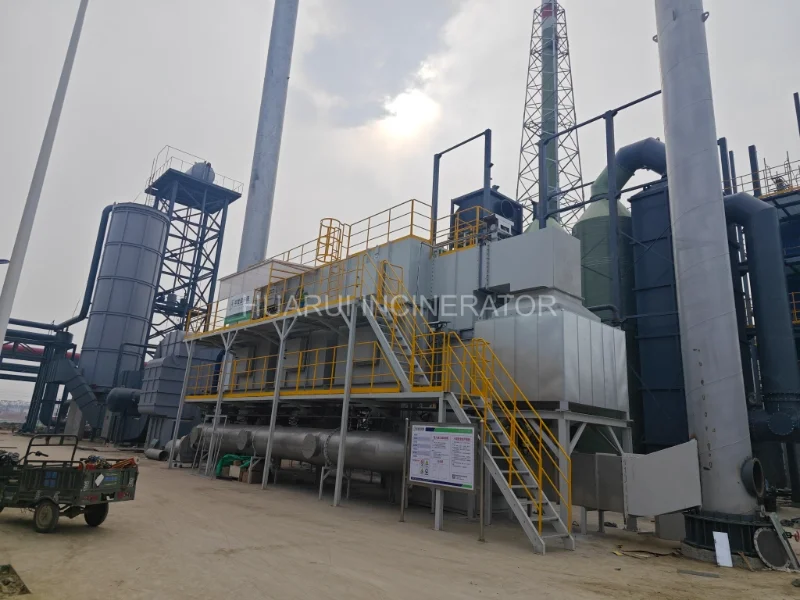
What Makes a Chemical Waste Incinerator Crucial — And What Sets Huarui Incinerator Apart?


Managing chemical waste is one of the more complex challenges faced by industries, governments, and environmental protection agencies today. Among the array of treatment options, the chemical waste incinerator remains a powerful tool — but it must be done right. In this article, we’ll explore what a chemical waste incinerator does, why it matters, key design and operational features, regulatory and environmental issues, and why Huarui Incinerator is uniquely positioned in this field.
What Is a Chemical Waste Incinerator — And Why Do We Need One?
A chemical waste incinerator is a facility designed to thermally decompose, reduce the volume of, and neutralize chemical wastes by burning them under controlled conditions. Chemical waste can include hazardous organic liquids, solvents, sludge, contaminated materials, or other waste streams which are toxic, corrosive, reactive, or otherwise dangerous.
Key Functions
Destruction of hazardous organics: Burning breaks down complex organic molecules (like solvents, resins, toxic organics) into simpler substances, ideally CO₂, water, and inert ash or slag.
Volume reduction: Incineration dramatically reduces the bulk and weight of many wastes, making handling, transport, and disposal of residues easier.
Neutralization of pathogens or biologically hazardous content: Some chemical wastes originate from pharmaceutical or medical processes; incineration helps ensure that microbes or toxins are neutralized.
Energy or heat recovery (in some designs): While not always the primary goal for chemical waste incinerators, some models recover heat to produce steam or electricity, improving efficiency.
What Are the Risks — Why Incineration Must Be Carefully Controlled?
Using a chemical waste incinerator isn't risk-free. Poor design, operation, or regulatory oversight can result in serious environmental and health hazards.
Emission of toxic byproducts: If combustion is incomplete, or temperatures and residence times are not maintained, toxic compounds such as dioxins, furans, NOₓ, SOₓ, heavy metals vaporized, or other volatile organic compounds (VOCs) may be emitted.
Air pollution beyond regulatory limits: Gases and particulates released can affect local air quality.
Ash and residue handling: Even if combustion is well done, residues (ash, slag) may contain concentrated hazardous materials and need careful disposal.
Operational failures: Inconsistent waste feed, temperature fluctuations, or maintenance lapses can lead to emissions or even dangerous conditions (fires, explosions).
What Makes a Good Chemical Waste Incinerator: Key Design & Operational Features
To overcome the risks and ensure safe, efficient, and environmentally responsible incineration, a well-designed chemical waste incinerator should include:
| Feature | Why It Matters |
|---|---|
| High combustion temperature & sufficient residence time | Ensures complete destruction of hazardous organics, minimizing release of unwanted byproducts. Temperatures often need to reach or exceed certain thresholds (e.g. > 850°C, sometimes > 1,100°C for secondary combustion). |
| Multiple combustion chambers / stages | Primary chamber for initial burning, secondary chamber or afterburner to clean up residual organics, and cooling / quenching zones. |
| Efficient air pollution control systems | Scrubbers, filters, electrostatic precipitators, selective catalytic reduction, or regenerative thermal oxidizers (RTOs). Removes particulates, acid gases, nitrogen oxides, volatile pollutants. |
| Stable waste feed and pre-treatment | Sludge dewatering, mixing, vapor control, ensuring that the type and moisture content of waste are compatible with combustion. |
| Automation and monitoring | Sensors for temperature, oxygen, flow, emissions; control systems to adjust air/fuel ratios; continuous emissions monitoring to meet regulatory thresholds. |
| Residue management | Safe handling, stabilization, and final disposal of ash, slag, or other solid waste. Minimizing leachability of toxic metals. |
| Safety systems | Fire suppression, containment, emergency shutdown, backup systems. |
Huarui Incinerator: Who Are They & What Capabilities Do They Bring?
Yixing Huarui Incinerator Technology Development Co., Ltd. (often referred to simply as Huarui Incinerator) is a Chinese company founded in 2007. Some of the relevant facts:
Registered capital: ~ 58 million yuan.
Employees: more than 140.
Fixed assets ~ 80 million yuan; plant area ~ 33,000 square meters.
ISO 9001:2015 certified; met national qualifications for environmental protection engineering contracting.
Product / Service Range
Huarui Incinerator’s capabilities include:
Liquid, gas, solid chemical waste incinerators.
Industrial hazardous waste incinerator, pharmaceutical and chemical industry incinerator.
Various furnace types: rotary kiln, solid waste incinerators, liquid waste incinerators, waste gas RTO (Regenerative Thermal Oxidizer) incinerator, pyrolysis incinerator, comprehensive incinerator, even mobile waste incinerator.
Sample Projects
A 60-ton/day hazardous waste incinerator project for a pharmaceutical company in Jiangxi.
Combined solid + liquid waste incinerator capacity for regions or industrial zones.
How Huarui Incinerator Meets the Key Requirements
Given the known best practices for chemical waste incineration, how does Huarui stack up? Let’s look at strengths and areas to watch.
Strengths
Diverse technology portfolio
Having multiple furnace types (rotary kiln, RTO, pyrolysis) means Huarui can select or customize the best incineration approach depending on the chemical waste’s nature (solid vs. gas vs. liquid; heat value; moisture content). This flexibility is key.Experience and scale
A large facility, many employees, established since 2007, plus export experience to Southeast Asia, Africa, South America, Middle East and other countries.Quality management systems
ISO 9001:2015 certification, and professional qualification in environmental protection project contracting, show formal structure, standardized procedures, which are essential for consistency and safety.Full lifecycle services
They are not just manufacturers of incinerators; they also provide engineering design, installation, commissioning, training, after‐sales service.Emission control and regulatory alignment
Although specific emission numbers may not be public in all cases, their products (e.g. waste gas RTO, comprehensive incinerator) show that air pollution control (APC) is part of their solutions. Also, smokeless/odorless operation is claimed in some project descriptions.
Challenges & Considerations
While Huarui has many positives, in any chemical waste incineration project, there are always trade-offs or concerns:
Ensuring that emissions of dioxins, heavy metals, acid gases, NOₓ, SOₓ are kept under strict limits requires continuous monitoring and maintenance. The more complex the chemical waste stream (chlorinated hydrocarbons, halogens, etc.), the more demanding this becomes.
Residue (ash, slag) must be tested and properly handled—if not, there can be downstream pollution (leachate, dust).
Combustion conditions (temperature, residence time, air supply) must be well controlled. If, for example, the furnace is fed with waste of variable composition, moisture content, or with large quantities of inert material, achieving proper combustion can be harder.
Community perception and regulatory compliance are key. Local environmental regulations often require not only emissions control but also noise, odor, visual impact, transportation of hazardous waste, safety in storage, etc.
Regulatory Frameworks & Environmental Impacts
Any chemical waste incinerator must operate under regulatory frameworks that ensure public health and environmental protection.
Air Emissions Legislation: Limits for particulate matter, volatile organic compounds (VOCs), NOₓ, SOₓ, acid gases, dioxins/furans. Depending on the country, also limits on heavy metals (mercury, lead, cadmium, arsenic, etc.).
Hazardous Waste Laws: Classification of chemical waste, transport requirements, manifesting, storage, disposal of residues.
Permitting & Monitoring Requirements: Continuous emissions monitoring systems (CEMS), periodic inspections, reporting, safety audits.
Community Health & Environmental Justice: Ensuring that the plant is sited responsibly, that local communities are informed and protected, that odor, noise, dust are mitigated.
Environmental impacts, if well managed, can be minimized; if mismanaged, incinerators can become focal points of pollution, complaints, legal action.
What to Ask When Considering or Using a Chemical Waste Incinerator
Whether you’re a company buying one, a regulator permitting one, or a community evaluating one, these are the questions you should ask:
What types of chemical waste will it handle? Solids? Liquids? Gases? Mixtures? Are there specific toxins, halogens, or problematic compounds?
What is the required combustion temperature and residence time? Are there secondary combustion chambers?
What pollution control equipment is included? Scrubbers, baghouses, precipitators, RTO, etc.
Emission data and compliance history: What are expected emissions? Can you see past performance or test results?
Capacity, throughput, fuel/energy needs: How much waste per day? What is calorific value of waste? Are there pre-treatment, drying, or auxiliary fuel requirements?
Residue handling: What is done with ash? Is it hazardous? How is it disposed of or stabilized?
Safety and emergency protocols: What happens in a malfunction? Fire suppression, backup power, alarms?
Ongoing maintenance and cost: Incinerators are complex machines; maintenance, spare parts, operator training are long-term commitments.
Local regulatory compliance and community impact: Permitting, odor control, traffic, site location.
Why Huarui May Be a Strong Choice — And When It Might Not Be
Putting together all the above, here’s a quick assessment of when Huarui Incinerator is likely to be a strong candidate — and when more scrutiny is needed.
When Huarui Is Especially Strong
If you have multiple chemical waste streams (solid, liquid, gas) and need a flexible solution. Huarui’s range of furnace types can be tailored.
If export or international standards compliance is needed. Their ISO certification, experience with export, and variety of equipment helps.
If long-term service, after-sales, training, and lifecycle support are important. Their project portfolio suggests they do more than simple manufacture.
If you need relatively large capacity. Huarui has done projects like 60 tons/day hazardous waste.
When You Should Be More Careful / Evaluate Closely
If the chemical waste is extremely toxic, with high halogen content or persistent organic pollutants (POPs). Such waste may demand very specialized incineration technology, high temperatures, specialized scrubbers, and perhaps additional treatment downstream.
If environment/community sensitivity is high (e.g., depressed area, maintained forest buffer, water bodies nearby). Impacts from traffic, noise, odor, emissions will be under scrutiny.
If regulatory requirements in your jurisdiction are especially strict (or ambiguous). Good to see compliance, certificates, emission test reports.
If costs of land, fuel, emissions permitting, maintenance are high. Incineration is capital-intensive and operational costs can be significant.
Case Study: Huarui’s Solid‐Liquid Comprehensive Incinerator for Mixed Wastes
One illustrative case: Huarui offers comprehensive incinerator systems that handle both solid and liquid wastes simultaneously. For example, they have projects combining 30 tons/day liquid waste with 10 tons/day solid waste hazardous waste incineration devices.
In such mixed systems:
Pre-treatment of liquid wastes (if necessary) to reduce moisture, ensure feed stability, and reduce splash/backflow.
Solid waste may need size reduction, drying.
Combustion chambers must be designed to accommodate both feed types; injectors or burners arranged to prevent quenching of flame or heat losses.
Waste gas treatment must handle vapors, acid gases, particulates from the solid fraction, and potentially heavy metals.
Huarui’s designs apparently manage these complexities, and they claim stable odorless/smokeless operation in many industrial solid waste incineration centers.
Environmental & Sustainability Perspectives: Is Incineration Always “Bad”?
There is often public concern: isn’t burning things always bad? The truth is more nuanced.
Pros:
Incineration can prevent improper dumping or leakage of chemical waste into soil or water.
It reduces volume and often weight of hazardous waste, reducing burden on landfills.
When combined with energy recovery, it can offset fossil fuel‐based heat or electricity.
Cons:
CO₂ emissions contribute to climate change. Even with clean burning, there’s always some GHG emission.
If emission control is weak, toxic emissions or acid gases may cause health problems.
Ash or slag may contain concentrated toxins; if not handled correctly, may leach contaminants.
Sustainability requires optimizing for minimal harmful emissions, maximizing energy/heat recovery where feasible, ensuring that residues are properly treated, and integrating incineration into broader waste management strategies (reduce, reuse, recycle, then destroy).
Final Take: Should You Use Huarui Incinerator for Your Chemical Waste Needs?
To conclude, here’s a checklist to help decide if Huarui Incinerator is right for you:
Nature of your waste: does it include chemical liquids, gases, solids, mixed streams? Do you have highly toxic compounds, halogens, POPs?
Required capacity: what throughput do you need? Daily, weekly volume?
Regulatory environment: are there strict emission, residue disposal, environmental impact assessments?
Budget: initial capital, operational cost, maintenance, fuel, emissions permitting, monitoring.
Desire for after-sales support: operator training, service, spares, modifications.
If your answers show that you need a flexible, proven, relatively large scale incineration solution, and you want one that has export experience and certified quality, Huarui Incinerator Technology Development Co., Ltd. is a strong contender.
Related news

Contact us