
Clear records
history record

News
Comprehensive Guide to Hospital Waste Disposal: Safe, Efficient, and Sustainable Solutions


In today’s healthcare environment, proper hospital waste disposal is non‐negotiable. With rising patient volumes, complex procedures, and intensive care units generating ever more waste streams, the challenge for hospitals is not only to treat patients but also to manage the by‐products of care. At Huarui Incinerator, we understand the importance of robust solutions for hospital waste disposal — and how the right incineration equipment can transform a hospital’s waste management program into one that is compliant, safe, and environmentally responsible.
Healthcare facilities around the world generate significant volumes of waste, including infectious waste, sharps, pathological materials, pharmaceuticals, chemical waste and general non‐hazardous refuse. According to the World Health Organization (WHO), the management of health‐care waste demands increased attention and diligence to avoid adverse health outcomes associated with poor practice. For hospitals and medical centres, implementing a comprehensive hospital waste disposal strategy is foundational for both regulatory compliance and patient and staff safety.
Below, we explore the key facets of hospital waste disposal: why it matters, what practices are critical, how technology — and specifically, incineration equipment — plays a role, and how hospitals can move toward more efficient, sustainable systems. By understanding these dimensions, healthcare providers can partner more effectively with suppliers like Huarui Incinerator to design tailored solutions.
The Importance of Hospital Waste Disposal
Proper hospital waste disposal is essential for multiple reasons: ensuring patient and staff safety, protecting the environment, fulfilling legal obligations, and optimising costs. Let’s break these down:
Protecting Health & Safety
When hospital waste disposal is mismanaged, the risks are real: infectious agents, sharps injuries, chemical exposures and contamination of facilities or the community. For example, the U.S. Centers for Disease Control and Prevention (CDC) notes that regulated medical waste should be stored in leak‐proof puncture‐resistant containers, kept in well‐ventilated, pest‐free areas while awaiting treatment. By ensuring a sound disposal pathway, hospitals reduce the hazard to their personnel, patients, visitors and neighbours.
Regulatory & Environmental Responsibility
Healthcare facilities are subject to stringent regulations governing medical and hazardous waste. The WHO emphasises that safe management of healthcare waste requires waste segregation, destruction and disposal practices that meet national and international standards. Failure to meet these obligations can lead to regulatory penalties, reputational damage, and environmental harm.
Cost & Operational Efficiency
The costs associated with hospital waste disposal are non‐trivial. The more efficient the system of segregation, treatment and disposal, the lower the overhead. As noted in a recent study, factors such as waste management itself, operational issues, training, awareness and environmental assessment all contribute to the cost and sustainability of medical waste handling. For hospitals, choosing the right disposal method — and corresponding equipment — can be an investment that pays back in safety, compliance, and reduced waste stream volumes.
Sustainability & Environmental Impact
Healthcare is increasingly accountable for its environmental footprint. According to research, hospitals produce millions of tons of waste each year, and actions to reduce and properly treat waste contribute directly to a healthier environment. Thus, a robust hospital waste disposal program is a key component of a sustainable healthcare facility.
Given this wide spectrum of responsibilities, hospitals must adopt a holistic approach to hospital waste disposal — one that spans from generation and segregation, to treatment and final disposal.
Key Steps in Effective Hospital Waste Disposal
Let’s consider the major stages of an effective hospital waste disposal program, and how hospitals can optimise each stage to support safety, efficiency and compliance.
Waste Segregation at the Source
One of the most critical components of hospital waste disposal is correct segregation at the point of generation. The sooner waste streams are identified and separated, the easier and safer the downstream disposal becomes. For example, using colour‐coded bins for sharps, infectious waste, pharmaceutical waste and general refuse is a best practice. Hospitals should ensure that staff understand what constitutes infectious, pathological, general, pharmaceutical, and chemical waste, and segregate accordingly.
This step reduces cross‐contamination risks, ensures that only the appropriate waste streams enter higher‐cost disposal processes, and simplifies final treatment. Without this, hospital waste disposal becomes more expensive, more hazardous, and harder to manage.
Proper Storage, Transport & Handling
After waste is segregated, the next phase in hospital waste disposal is safe storage and transport — both within the facility and then off‐site (if applicable). As highlighted by the CDC, regulated medical wastes must be stored in leak-proof, puncture-resistant containers in well-ventilated, pest‐free areas while awaiting treatment or transport. Hospitals must ensure clear labelling, secure containment, and rigorous documentation of the waste chain.
Proper transport pathways (internal and external) are essential to prevent accidental exposure or environmental release. Any disruption or breach in the chain compromises the hospital waste disposal system and risks penalties or infection.
Treatment & Final Disposal
The heart of hospital waste disposal lies in effective treatment and disposal methods. Depending on waste type, volume, local regulations and environmental mandates, healthcare facilities may use incineration, autoclaving/steam sterilisation, chemical disinfection, gas sterilisation, or combinations thereof.
For certain waste streams such as infectious pathological waste, incineration remains a preferred or required method in many jurisdictions. High‐temperature incineration can render hazardous waste inert, reduce volume, and destroy pathogens. As noted in a comprehensive review, incinerators operating at 850-1100 °C with gas-cleaning equipment can comply with international emission standards.
However, treatment selection must reflect local regulation, environmental commitments and the nature of waste generated. For effective hospital waste disposal, hospitals should analyse their waste types, volumes and local context, then match treatment method accordingly.
Monitoring, Training & Continuous Improvement
A fully functioning hospital waste disposal program doesn’t stop at setting up bins and installations. Ongoing monitoring, staff training, waste auditing, and continuous improvement are essential. A study analysing medical waste management in hospitals found key factors driving success included medical waste management itself (26.6 %), operational management issues (21.7 %), training (17.8 %), raising awareness (17.5 %) and environmental assessment (16.4 %)—underscoring that human and organisational elements are critical.
Training ensures that hospital staff at all levels understand their role in hospital waste disposal: from nursing and surgery to janitorial services, lab personnel and facilities management. Awareness alone is not enough; operational standards, documentation, and performance tracking must underpin the system.
Waste Minimisation & Sustainability
Though often overlooked, waste minimisation is a strategic dimension of hospital waste disposal. By reducing the volume of waste requiring high-cost treatment, hospitals can improve sustainability and reduce disposal burdens. Strategies include switching from single-use to reusable items, bulk purchasing to reduce packaging waste, and recycling non‐hazardous streams.
Minimisation supports hospital waste disposal via fewer hazards, lower cost and less environmental impact — enabling hospitals to invest more in treatment infrastructure and less in waste burdening.
The Role of Incineration Equipment in Hospital Waste Disposal – Why Huarui Incinerator Matters
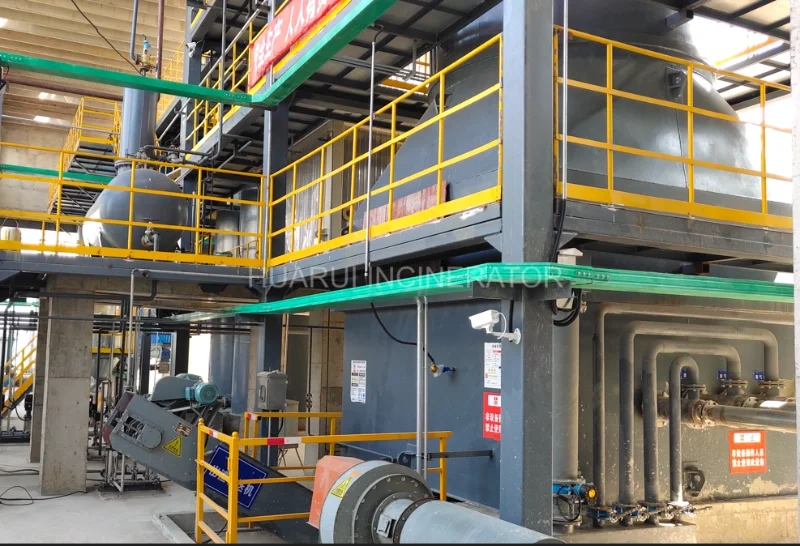
At Huarui Incinerator, we recognise that the equipment used in hospital waste disposal plays a pivotal role in achieving safety, compliance and operational efficiency. Here’s how high-quality incineration equipment fits into the broader disposal ecosystem and why selecting the right partner matters.
Why Incineration is a Key Treatment Mode
For many hospitals and healthcare facilities, incineration remains a cornerstone of hospital waste disposal – especially for infectious, pathological, anatomical, drug‐contaminated or regulated medical waste. Incineration can reduce the volume of waste significantly, neutralise biological hazards and, if designed correctly, meet emissions standards. According to industry sources, incineration is a treatment option where it is feasible and environmentally controlled.
Moreover, when a hospital’s waste disposal program is built on robust incineration infrastructure, the chain of handling from segregation, transport, treatment and final disposal becomes more reliable and transparent.
Selecting the Right Incinerator – Key Considerations
When hospitals evaluate equipment for their hospital waste disposal programmes, several factors must be considered carefully. These include:
Temperature & Treatment Efficiency: High‐temperature incineration (850–1100 °C or more) ensures complete destruction of pathogens and organic content, as industry research indicates.
Emission Controls & Environmental Compliance: Modern incinerators must incorporate gas-cleaning equipment, activated carbon filters, dust collection and other emission controls to meet regulatory standards.
Capacity & Throughput Matching Waste Volume: For hospital waste disposal, the incinerator must be sized appropriately to handle the anticipated volume of waste in the facility (general, infectious, sharps, anatomical).
Automation, Safety Features & Monitoring: Advanced features such as automated feeding, ash removal, system monitoring, alarm systems, and remote diagnostics enhance reliability and reduce labour burden.
Maintenance & Serviceability: Ongoing maintenance is vital for hospital waste disposal systems. Partnering with a supplier that provides service, spare parts, and training ensures continuity.
Integration with Waste Stream Processes: The incinerator equipment must align with upstream segregation and downstream ash handling – enabling the hospital to manage the full chain of hospital waste disposal seamlessly.
How Huarui Incinerator Adds Value to Hospital Waste Disposal
As a supply partner committed to excellence in hospital waste disposal, Huarui Incinerator offers the following distinct advantages:
Customised solutions calibrated to the hospital’s waste profile (infectious waste, anatomical waste, general waste, pharmaceuticals) so the incinerator aligns exactly with disposal needs.
High‐efficiency thermal systems engineered for high throughput, low emissions and full compliance — ideal for hospital waste disposal where reliability matters.
Integrated safety and control systems that support hospital personnel, reducing operator risk and simplifying the disposal chain.
After-sales service, technical training, and performance monitoring to ensure that your hospital waste disposal system remains operational, compliant and optimised over its lifecycle.
A partner mindset: Beyond equipment supply, Huarui Incinerator collaborates with hospitals to ensure the upstream processes (segregation, storage, transport) align with the treatment equipment — ensuring the full chain of hospital waste disposal is managed.
By choosing Huarui Incinerator as your supplier, hospitals can upgrade their hospital waste disposal programme from reactive to proactive, from minimal compliance to operational excellence.
Designing a Robust Hospital Waste Disposal Program: Strategic Framework
Putting together a high-performing hospital waste disposal program requires a structured plan, meaningful investment, and ongoing monitoring. Below is a framework hospitals can use to design or upgrade their programs, integrating incineration equipment as a core component.
1. Assessment & Baseline
Conduct a full audit of current hospital waste disposal practices: inputs (types & volumes), processes (segregation, storage, transport, treatment), outputs (ash, emissions, disposal) and costs.
Map waste streams: infectious waste, sharps, anatomical, pharmaceutical, chemical, general. Understand volumes and how they vary by department, shift and patient type. Studies show waste generation rates vary widely across facilities—in one hospital, infectious waste accounted for over one‐third of the total medical waste stream.
Review regulatory obligations: national, regional and municipal waste disposal laws, permits required for incinerators, emission limits and disposal pathways. For example, California has detailed legislation around medical waste classification, storage and incineration.
2. Strategy & Segregation Plan
Establish clear hospital waste disposal policies: define each waste stream, assign responsible personnel, clarify containers, colour codes, signage and documentation.
Implement segregation training: ensure all staff understand their role in hospital waste disposal — from the point of generation (e.g., surgical theatre, wards, labs) onward. According to research, training and awareness are critical enablers of effective waste management.
Select containers and colour‐coding systems: Sharps in puncture‐resistant containers; infectious waste in sealed, labelled bags; anatomical waste in compliant containers; pharmaceuticals per local hazardous waste rules. Proper segregation simplifies downstream treatment and reduces risk.
3. Infrastructure & Equipment Specification
Based on waste audit volumes and composition, select an incineration system sized appropriately — for example a two-chamber incinerator with sufficient capacity for pathological and infectious wastes, with emissions controls.
Ensure integration with other infrastructure: waste loading area, ash handling, flue gas cleaning, monitoring systems, and safe stack/outlet routing.
Partner with Huarui Incinerator to customise equipment for your facility: we can design systems to specifically meet your hospital’s waste disposal profile and regulatory zone.
Ensure redundancy and maintenance planning: hospital waste disposal must be reliable — downtime is not acceptable when dealing with infectious/regulated waste.
4. Transport & Storage Protocols
Define internal transport routes, storage rooms, and external transfer to the incinerator or disposal site. These must comply with infection‐control protocols and local regulation.
Storage rooms should be ventilated, pest-free, secure, and labelled clearly. The CDC guidance emphasises that regulated medical waste awaiting treatment must be stored in well-ventilated and pest‐inaccessible environments.
Maintain documentation: chain-of-custody, waste logs, volume records, treatment records, ash/disposal logs. These support regulatory compliance and audits.
5. Treatment & Disposal Execution
Instigate the incineration process per the equipment specifications: ensure that temperatures, residence time, flue gas cleaning, ash removal, monitoring and record-keeping all meet the required standard.
Monitor emissions, residue quality, ash disposal (typically landfill or other approved pathway), and ensure outputs meet local environmental criteria. Research shows that incineration when done properly (with high temperatures and gas‐cleaning) can meet emission standards.
Track volumes processed, downtime, residual ash weights, and disposal costs — feeding these metrics into your continuous improvement loop.
6. Training, Monitoring & Continuous Improvement
Provide regular training to all staff involved in hospital waste disposal: from clinicians and nurses to waste handlers and facilities staff — emphasising segregation, safety, correct container use, incident management and waste documentation.
Monitor key performance indicators (KPIs): waste volumes by stream, cost per kg, segregation error rate (e.g., general waste in infectious stream), equipment downtime, emissions levels, number of staff incidents/injuries.
Audit periodically: review policies, procedures, container placement, signage, staff compliance and purging of outdated materials. Improvements in medical waste management showed strong links to operational standards and training.
Sustainability targeting: aim to reduce waste requiring high‐cost disposal, increase recycling of non‐hazardous streams, evaluate reusable options, and track environmental impact metrics. As one health‐care waste guide notes, minimising waste supports more effective hospital waste disposal overall.
Overcoming Hospital Waste Disposal Challenges & Common Pitfalls
No programme of hospital waste disposal is without its obstacles. Understanding common challenges can help hospitals anticipate issues and partner more effectively with equipment suppliers and waste‐management teams.
Inadequate Segregation
One of the most persistent problems in hospital waste disposal is improper segregation — where infectious or regulated waste is mixed with general waste, raising disposal cost and risk. In a case study, a hospital in Ghana observed that infectious wastes were mixed with general wastes at generation, increasing sharp injuries and mis‐management.
Lack of Staff Awareness & Training
Even with the right equipment in place, hospital waste disposal can falter if staff do not fully understand their role or responsibilities. Training, awareness programmes, and continuous reinforcement are critical. Studies show training and awareness are integral to sustainable medical waste management.
Regulatory Complexity & Compliance Gaps
Hospitals must navigate local, national and international regulation in their hospital waste disposal programmes. For example, California’s Medical Waste Management Act includes detailed requirements around incineration, containment, transport and storage. Failure to meet these obligations can result in fines, forced closure, or reputational damage.
Equipment Downtime & Maintenance Issues
When waste disposal equipment such as the incinerator is down, hospitals face backlog, infection risk, cost escalation and regulatory exposure. It is imperative that hospital waste disposal equipment be reliable, and that suppliers provide strong after-sales service.
Cost Pressures & Waste Volume Growth
As hospitals expand services, the volume of waste streams grows. Without proactive surveillance of waste generation and minimisation strategies, hospitals may see disposal costs balloon. According to one source, hospitals generate more than 29 pounds of waste per bed per day on average. By recognising these pitfalls and building mitigation strategies into the hospital’s waste disposal blueprint, healthcare facilities can deliver stronger outcomes.
The Environmental & Future Outlook for Hospital Waste Disposal
As regulatory, environmental and stakeholder pressures increase, hospital waste disposal will continue to evolve. Here are some forward-looking considerations:
Growing Focus on Sustainability
Healthcare organisations are increasingly assessed on their environmental impact. Waste disposal is a major part of this. Initiatives to reduce, reuse and recycle have direct bearing on hospital waste disposal — as waste volumes shrink, treatment burdens ease.
Technology & Data-Driven Waste Management
Future hospital waste disposal programs will increasingly leverage data analytics, monitoring sensors, automated segregation, and perhaps AI-driven waste classification. Some academic work is already exploring hybrid classification networks for medical waste.
Innovation in Treatment Technologies
While incineration remains vital, emerging technologies such as microwave/steam sterilisation, chemical disinfection, modular onsite treatment, and zero-waste design are gaining traction. The WHO recommends favouring safe, environmentally sound treatment where feasible. Hospitals should evaluate how their hospital waste disposal strategy can incorporate such innovations.
Regulatory & Community Pressure
Stakeholders — including patients, staff, regulators and the broader community — are increasingly vigilant about how hospital waste disposal is handled. Transparent reporting, strong emissions performance and public accountability are becoming non-negotiable.
By aligning your hospital waste disposal program with these future trends, hospitals can not only comply — they can lead.
Why Collaborating with Huarui Incinerator Elevates Your Hospital Waste Disposal Strategy
Selecting Huarui Incinerator as a strategic partner in your hospital waste disposal program means more than just buying equipment. Here’s how we support your success:
Tailored Solutions: We work with you to understand your waste profile, regulatory landscape and operational goals — and then design an incinerator system matched to your hospital’s needs.
High Performance & Compliance: Our equipment is engineered for high temperatures, robust emission controls and dependable operation — ensuring your hospital waste disposal program meets regulatory and environmental standards.
Full Lifecycle Support: We provide training, maintenance support, monitoring assistance and consumables management so your hospital waste disposal system remains optimised long‐term.
Integration & Consultation: Beyond equipment, we advise on the upstream (segregation, storage, transport) and downstream (ash handling, documentation) steps in hospital waste disposal, enabling a holistic solution.
Sustainability Mindset: We help you design disposal systems that are efficient, lower-emission and aligned with broader sustainability goals for your hospital.
With Huarui Incinerator as your partner, your hospital can convert the challenge of hospital waste disposal into a competitive advantage: safer operations, regulatory confidence, environmental responsibility, and cost control.
Final Thoughts: Making Hospital Waste Disposal Work for Your Facility
In summary, hospital waste disposal is a multidisciplinary challenge demanding attention to process, technology, people and sustainability. For hospitals committed to delivering safe, efficient care, waste disposal must be treated as a core part of the operational ecosystem — not an afterthought.
By following the structure we’ve outlined — audit, segregation, infrastructure, equipment, training and continuous improvement — healthcare facilities can manage their waste streams effectively. Incorporating the right incineration equipment and partnering with a competent supplier such as Huarui Incinerator ensures that the critical treatment link in the disposal chain works reliably.
We encourage hospitals to view waste disposal as an opportunity: an opportunity to enhance safety, reduce cost, meet compliance, minimise environmental footprint, and reinforce their commitment to quality care. If your facility is exploring how to upgrade or optimise its hospital waste disposal programme, Huarui Incinerator is here to support you every step of the way.
Related news

Contact us