cancel
Clear records
history record


News



Please use the browser share function
Share to WeChat
Africa’s approach to waste incineration is shaped by a combination of national environmental laws, public health concerns, and evolving international commitments. While the continent is not governed by a single unified framework, most countries apply increasingly strict rules on emissions control, hazardous waste handling, and facility permitting. Understanding these incineration regulations in Africa is essential for operators, investors, and public institutions involved in waste-to-energy or medical waste treatment projects.
This article provides a structured overview of how incineration is regulated across key African regions, what compliance typically requires in practice, and how technology providers such as Huarui Incinerator support compliant system deployment.
Unlike the European Union or certain Asian blocs, Africa does not operate under a continent-wide incineration directive. Instead, regulation is driven by:
National environmental protection agencies
Public health ministries (especially for medical waste)
Urban sanitation authorities
International agreements such as the Basel Convention
Despite differences in enforcement capacity, most countries share three regulatory priorities:
Air emissions control (dioxins, NOx, particulate matter)
Safe handling of hazardous and medical waste
Environmental impact assessment (EIA) before facility approval
These shared priorities are gradually harmonizing standards across regions, especially in urbanized economies.
Countries such as Egypt, Morocco, Algeria, and Tunisia tend to have more developed environmental permitting systems.
Mandatory Environmental Impact Assessments for incineration plants
Licensing requirements tied to emission thresholds
Strong focus on industrial zoning (incinerators must be located away from residential areas)
For example, Egypt’s waste management reforms emphasize integrated solid waste systems where incineration is used mainly for medical and hazardous waste rather than general municipal waste.
Morocco has also invested in controlled thermal treatment systems in industrial zones, often linked to hospital networks.
West African nations such as Nigeria, Ghana, and Côte d’Ivoire are experiencing rapid urbanization, which increases demand for waste treatment infrastructure.
Formal regulations exist but enforcement varies
Many facilities operate under municipal permits rather than strict national incineration codes
Medical waste incineration is more regulated than municipal solid waste incineration
Nigeria, for instance, has federal environmental guidelines through its environmental agency, but implementation often depends on state-level capacity.
This creates a dual system: formal compliance frameworks on paper, and variable enforcement in practice.
East African countries such as Kenya, Uganda, Tanzania, and Rwanda place strong emphasis on public health compliance, especially in healthcare waste incineration.
Strict rules for hospital and laboratory waste disposal
Mandatory high-temperature combustion standards for infectious waste
Licensing tied to emissions and ash disposal control
Increasing use of centralized medical waste treatment facilities
Kenya, in particular, has been active in regulating healthcare waste through national environmental authorities, requiring approved incineration technologies for hospitals and clinics.
Rwanda has taken a centralized approach, developing structured waste management systems in urban areas.
South Africa leads the continent in environmental regulation maturity.
Air Quality Act compliance for emission limits
Strict permitting for hazardous waste incineration
Continuous emission monitoring requirements for large facilities
Strong enforcement of landfill diversion policies
In practice, incineration is carefully controlled and often integrated into broader waste-to-energy strategies. Other countries in the region, such as Botswana and Namibia, are following similar frameworks, though at smaller scale.
Across most African jurisdictions, incineration projects must meet several baseline requirements:
Before construction, operators must conduct an EIA covering:
Air emissions modeling
Ash disposal pathways
Public health risk assessment
Traffic and logistics impact
Even where limits differ, regulators commonly monitor:
Dioxins and furans
Carbon monoxide
Nitrogen oxides
Particulate matter
Most regulations require:
Secondary combustion chambers
Minimum high-temperature operation for hazardous waste
Controlled residence time for complete combustion
Bottom ash and fly ash must be:
Safely contained
Tested for toxicity where required
Transported to approved disposal sites
Facilities are typically subject to:
Annual license renewal
Site inspections
Reporting of waste volumes and emissions
Even with regulations in place, implementation varies due to:
Limited monitoring infrastructure
High cost of continuous emission systems
Informal waste collection systems in some urban areas
Lack of technical training in facility operation
This gap between regulation and execution is one of the defining challenges of incineration regulations Africa today.
As a result, many governments are increasingly prioritizing standardized equipment and turnkey solutions that reduce operational variability.
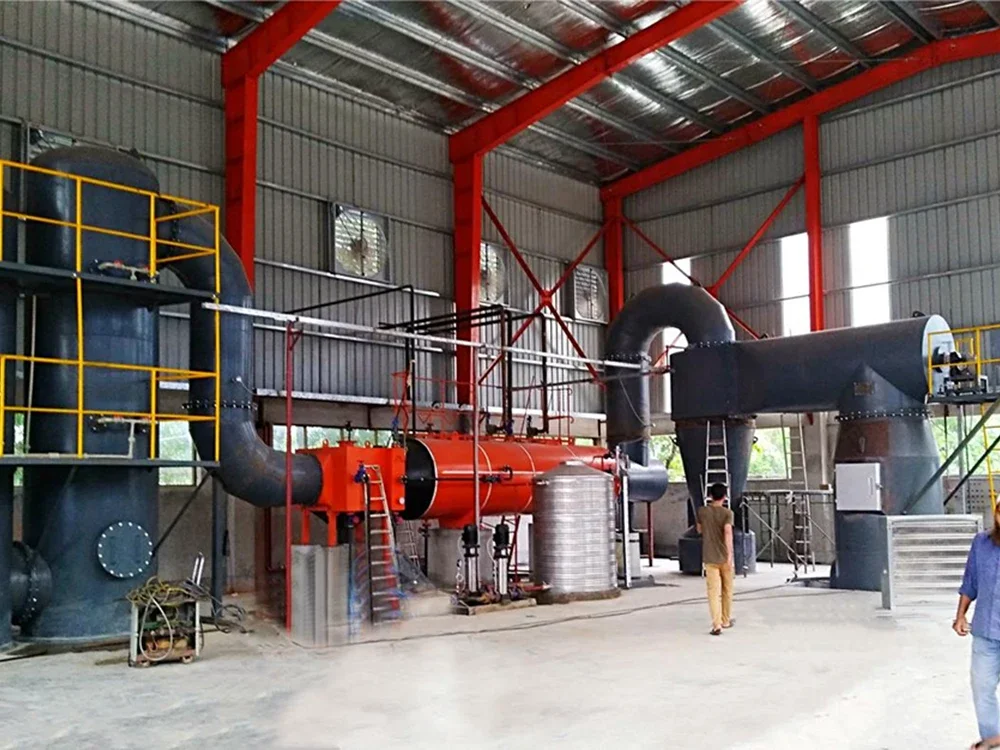
Modern incineration systems are critical to meeting compliance requirements across African markets. Key technological expectations include:
Dual-chamber combustion for complete waste destruction
Automated temperature control systems
Integrated flue gas treatment units
Modular designs suitable for remote or urban deployment
Fuel-efficient operation to reduce dependency on auxiliary fuel
Technology providers such as Huarui Incinerator play an important role in supplying systems designed to align with these regulatory expectations. Their solutions are widely used in healthcare, municipal, and industrial waste applications where compliance and operational stability are both required.
More technical details about available systems can be found here:
Huarui incinerator product solutions – https://www.hrincinerator.com/product
When selecting an incineration system for African regulatory environments, decision-makers typically evaluate:
Compliance compatibility with national emission standards
Ease of maintenance and operator training requirements
Availability of spare parts and local support
Adaptability to variable waste composition
Fuel efficiency under intermittent operation conditions
In many cases, projects fail not because of regulatory design, but because systems are not suited to local operational realities.
Several trends are shaping the future of waste incineration governance across Africa:
Increased alignment with international environmental standards
Expansion of public-private partnerships in waste infrastructure
Growth in medical waste treatment due to healthcare system expansion
Gradual introduction of emissions monitoring technologies
Shift toward integrated waste-to-energy systems in major cities
Over the next decade, regulatory systems are expected to become more consistent, especially as urban populations grow and environmental concerns intensify.
Waste incineration in Africa is governed by a complex and evolving set of national regulations rather than a unified framework. While North and Southern Africa tend to have more structured enforcement systems, West and East Africa are rapidly developing regulatory capacity, particularly in healthcare and hazardous waste management.
Understanding incineration regulations Africa requires not only knowledge of legal frameworks but also practical awareness of enforcement conditions, infrastructure limitations, and technology requirements. For operators and planners, success depends on aligning equipment selection, operational strategy, and compliance systems from the earliest project stages.
Please use the browser share function
Share to WeChat
Related news

Contact us