
Clear records
history record

News
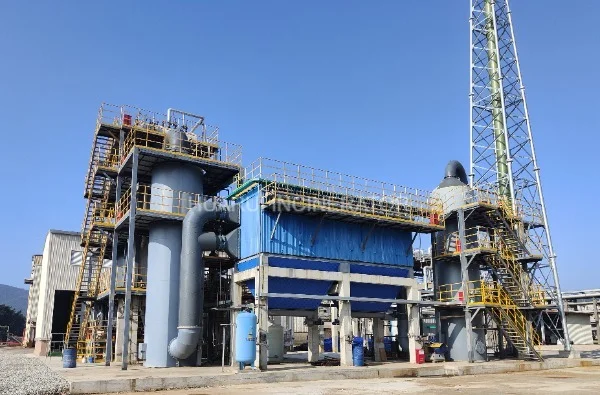
What Size Incinerator Do You Really Need?


Choosing the right incinerator size is one of the most critical decisions for any organization handling waste disposal. Whether you operate a hospital, industrial facility, agricultural site, or municipal project, selecting the correct capacity directly affects operational efficiency, compliance, and long-term cost control.
This incinerator sizing guide will walk you through the practical factors that determine the ideal size for your operation, helping you avoid overspending on oversized equipment or facing bottlenecks with undersized systems.
Why Incinerator Size Matters More Than You Think
Many buyers assume that bigger is always better. In reality, improper sizing leads to operational inefficiencies:
Oversized incinerators waste fuel, increase maintenance costs, and operate below optimal thermal efficiency.
Undersized incinerators create backlogs, increase labor demands, and may violate environmental regulations due to incomplete combustion.
Correct sizing ensures:
Stable combustion temperatures
Efficient fuel usage
Consistent waste throughput
Regulatory compliance
Step 1: Calculate Your Daily Waste Volume
The first and most important metric is your daily waste generation.
Ask yourself:
How many kilograms of waste are produced per day?
Is waste generation consistent or seasonal?
Are there peak periods (e.g., harvest season, medical surges)?
Practical Example
Small clinic: 10–20 kg/day
Medium hospital: 100–300 kg/day
Industrial facility: 500–2000+ kg/day
When calculating, always include a buffer of 20–30% to account for fluctuations.
Step 2: Understand Waste Type and Composition
Not all waste burns the same way. The type of waste significantly impacts the required incinerator capacity.
Key Waste Categories
Medical waste: High moisture content, requires higher temperatures
Industrial waste: May include hazardous or chemical components
Animal waste: Dense and high in fat content
Municipal solid waste: Mixed composition, inconsistent calorific value
Why This Matters
High-moisture waste requires longer burn times
Dense waste reduces throughput capacity
Hazardous waste may require secondary combustion chambers
A 100 kg/day incinerator for dry waste is not equivalent to one handling wet medical waste.
Step 3: Define Operating Hours
Your incinerator size depends heavily on how many hours per day it will operate.
Two Typical Scenarios
1. Short Operating Window (4–6 hours/day)
You will need a larger capacity incinerator to process all waste quickly.
2. Extended Operation (8–24 hours/day)
You can use a smaller unit, as waste is processed continuously.
Formula Approach
Required Capacity =
Daily Waste Volume ÷ Operating Hours
Example:
240 kg/day ÷ 8 hours = 30 kg/hour incinerator
Step 4: Consider Burn Rate and Cycle Time
Incinerators do not process waste continuously without interruption. Each cycle includes:
Loading
Primary combustion
Secondary combustion (afterburning)
Cooling/ash removal
Typical Cycle Time
Small units: 1–2 hours per batch
Medium units: 2–4 hours
Large systems: continuous or semi-continuous
This means your actual throughput is lower than the theoretical maximum.
Step 5: Plan for Future Growth
One of the most common mistakes is sizing only for current needs.
Ask:
Will waste volume increase in the next 3–5 years?
Are there expansion plans?
Will regulations require additional treatment?
A well-sized incinerator should accommodate future demand without immediate upgrades.
Step 6: Evaluate Environmental and Regulatory Requirements
Different regions impose strict emissions standards. These may affect sizing decisions:
Requirement for secondary combustion chambers
Minimum temperature thresholds (e.g., 850°C–1100°C)
Gas residence time requirements
Air pollution control systems
Larger or more advanced systems may be necessary to meet compliance.
Step 7: Batch vs Continuous Incinerators
Batch Incinerators
Suitable for small to medium operations
Lower initial investment
Flexible usage
Continuous Incinerators
Designed for large-scale waste processing
Higher efficiency for constant waste streams
Require consistent feeding and monitoring
Choosing between these impacts both size and configuration.
Step 8: Space and Installation Constraints
Physical space often limits incinerator size.
Consider:
Installation footprint
Chimney height requirements
Access for loading and maintenance
Local zoning regulations
A compact design may be preferable for urban or restricted environments.
Step 9: Fuel Type and Energy Efficiency
Incinerators can use different fuels:
Diesel
Natural gas
LPG
Dual-fuel systems
Fuel type affects:
Operating cost
Combustion efficiency
Equipment size
Efficient systems often require less oversized capacity because they maintain optimal burn conditions.
Step 10: Work With an Experienced Manufacturer
Sizing is not just about numbers—it requires engineering judgment. A reliable manufacturer will:
Analyze your waste profile
Recommend appropriate capacity
Customize chamber size and burner configuration
Ensure compliance with local standards
For tailored solutions, you can explore Huarui’s full range of incineration systems here:
https://www.hrincinerator.com/product
Common Sizing Mistakes to Avoid
1. Ignoring Waste Variability
Waste is rarely consistent. Always include buffer capacity.
2. Overestimating Throughput
Marketing specs often show ideal conditions, not real-world performance.
3. Choosing Based on Price Alone
Undersized systems lead to higher long-term costs.
4. Skipping Regulatory Review
Non-compliant systems can result in fines or shutdowns.
5. Not Planning for Maintenance Downtime
You need capacity flexibility during servicing periods.
Quick Sizing Reference Table
| Daily Waste (kg) | Suggested Capacity |
|---|---|
| 10–50 | Small batch unit |
| 50–300 | Medium incinerator |
| 300–1000 | Large batch or small continuous |
| 1000+ | Continuous system |
This table is a starting point only—actual requirements depend on the factors discussed above.
Final Thoughts
Selecting the right incinerator size is a balance between operational demand, waste characteristics, regulatory requirements, and future scalability. There is no one-size-fits-all solution.
A properly sized incinerator will:
Operate efficiently
Reduce fuel consumption
Maintain compliance
Scale with your business
If you are unsure, it is always better to consult with experienced engineers who can evaluate your specific conditions and recommend a system that fits both current and future needs.
Related news

Contact us