
Clear records
history record

News
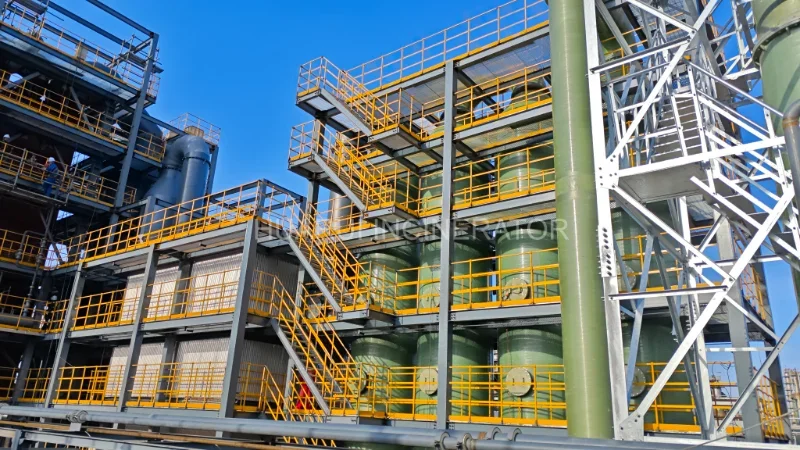
Why Should You Consider a Large Incinerator Solution by Huarui Incinerator?


In today’s rapidly evolving industrial and environmental landscape, organizations are confronted with ever-increasing volumes of waste materials — from bulk general waste and agricultural by-products to medical and hazardous streams. The concept of a large incinerator solution has therefore emerged as a powerful and strategic choice for companies and municipalities seeking efficient, safe, and compliant waste-disposal systems. This article explores why partnering with Huarui Incinerator can help you achieve a cutting-edge large incinerator solution tailored to your needs.
1. Understanding the Large Incinerator Solution: What It Is and Why It Matters
What is a large incinerator solution?
A large incinerator solution refers to a waste-combustion system designed at high capacity, capable of handling substantial volumes of waste input, often in continuous or semi-continuous feed modes, with high burn-rates, large chamber volumes, and advanced emission-control systems. These solutions go beyond small workshop or low-capacity units: they are enterprise-scale installations designed to integrate with industrial facilities, municipalities, or large-scale waste-management operations. For example, some large-scale designs handle burn-rates of 1 000 kg/hr or more.
Why does such a solution matter?
Because waste volumes are growing, regulatory demands are increasing, and cost-pressures are mounting, a large incinerator solution gives organizations:
The ability to meet high throughput of waste, thus reducing backlog and accumulation.
Emissions control and compliance with environmental standards (by using dual-chamber combustion, gas retention, scrubbers, filters). For instance, some systems maintain 2-second gas retention in the secondary chamber to ensure full combustion.
Operational efficiency and potential savings compared to outsourcing or landfill-reliant models.
Integration into sustainability goals (waste reduction, energy recovery potential, reduced landfill usage).
Why choose Huarui Incinerator for your large incinerator solution?
While many providers exist, partnering with a specialist such as Huarui Incinerator means you can benefit from:
A focus on large-scale incineration systems and customisable configurations.
Expert knowledge of design, installation, commissioning, and regulatory compliance.
A solution tailored to your waste-streams, volumes, site constraints and environmental commitments.
In short: if you’re looking for a high-capacity, future-proof system, a large incinerator solution from Huarui positions you to manage your waste and environmental footprint effectively.
2. Key Features of a High-Capacity Large Incinerator Solution
Chamber size and feed capacity
One of the hallmarks of a large incinerator solution is the size of the combustion chamber and the feed capacity. For example, industry-leading units may feature volumes around 8.7 m³ and burn rates up to 600 kg per hour. Large chambers allow the handling of bulky waste, longer burn-cycles and less frequent loading.
Multiple chambers and complete combustion
Ensuring complete combustion is critical for both efficiency and emissions control. Many large incinerator solutions use a dual-chamber design: a primary combustion chamber where waste is burned, followed by a secondary chamber (after-burner) where unburned gases are oxidised, ensuring minimal emissions of harmful constituents. For instance: “Dual-Chamber Technology – Ensures complete combustion while meeting environmental regulations.”
Advanced environmental compliance & emission controls
Large incinerator solutions must meet stringent environmental regulations. To that end, features often include:
High operational temperatures (> 850 °C or more) for complete destruction of organics.
Gas retention times in the secondary chamber (e.g., 2 seconds) to ensure thorough oxidation.
Scrubber systems, ceramic filters, multi-reagent dosing to clean flue gases. For example, one manufacturer talks about “99.9% clean air exhaust” using ceramic filter elements and dosing systems.
Flexible loading and automation for high throughput
A large incinerator solution must accommodate large volumes of waste efficiently. To this end, many systems offer:
Large loading doors or top-loading hoppers for bulky items (e.g., front-end loader feed).
Semi-automatic or fully automatic loading systems and ash-removal automation. For instance, some systems feature automated ash removal to reduce downtime.
Modular or containerised units for ease of installation and relocation.
Operational efficiency and adaptability
Large incinerator solutions are designed for continuous or heavy-duty operation, meaning less downtime and greater throughput. Other attributes include:
Robust construction materials (e.g., heavy‐duty steel, thick refractory lining).
Thermal efficiency (well-insulated chambers, optimal burner design).
Data monitoring and control systems for performance tracking (remote monitoring).
Waste stream diversity
Your waste streams may include general municipal waste, hazardous waste, medical waste, agricultural waste, or industrial by-products. A truly flexible large incinerator solution will be capable of handling more than one type of stream — or be configurable for your specific stream. For example, one large agricultural-incinerator design handles large animals, farm waste packaging and crop residues.
3. Benefits of Implementing a Large Incinerator Solution With Huarui
Cost savings and reduced landfill dependence
By investing in a large incinerator solution, your organisation can significantly reduce reliance on external waste haulers, landfill tipping fees, and associated logistics. Over time, especially at high volumes, disposal costs can drop and budgeting becomes more predictable.
Environmental performance and regulatory peace-of-mind
A well-designed solution from Huarui helps you ensure compliance with local and international environmental standards. With advanced emissions control and robust design, you’re better equipped to meet future regulations, avoid penalties and protect your corporate reputation.
Operational reliability and throughput
Because a large incinerator solution is designed for high-capacity operation, your facility avoids bottlenecks in waste handling. You gain operational reliability, shortened disposal cycles, and the ability to handle fluctuations or increase in waste-volumes without reworking the system.
Flexibility and scalability
Partnering with Huarui means you can anticipate future growth. Many large incinerator solutions support modular expansion, automation upgrades, and can be re-targeted for different waste streams as your operations evolve. This scalability means you won’t outgrow your system quickly.
Opportunity for waste-to-value or energy recovery
While the primary goal may be disposal, many large incinerator solutions allow for energy recovery or resource-recovery from ash if designed accordingly. Although this may require additional equipment, the base large incinerator solution gives you the foundation for moving toward a circular-economy model.
4. Key Considerations When Planning Your Large Incinerator Solution
Waste characterisation and feed rates
Before committing to a large incinerator solution, you’ll need a thorough understanding of your waste streams: volume, composition, calorific value, moisture content, bulkiness, frequency of generation. These metrics help define burn-rate, chamber size, loading method, and refractory design. For example, burn rates in large systems are often tied to calorific value of the waste.
Site-requirements and infrastructure
Large incinerator solutions require appropriate site preparation: foundations, power supply, fuel supply (if burners are fuel-fed), waste feed handling (hoppers, loaders), emissions stack and treatment, ash collection and disposal or reuse. Matters to check: height limitations, access, loading logistics, maintenance access, ventilation.
Regulatory permit-process and environmental-approval
Because large incinerators deal with high-temperatures, combustion emissions, ash residue, they often require detailed permitting: air-emissions, ash disposal, stack-monitoring, noise, traffic. Your selected large incinerator solution provider (Huarui) should assist with permit planning and regulatory compliance alignment.
Emissions controls and future-proofing
Today’s large incinerator solution must account for stricter emissions standards. Consider: gas-cleaning systems, continuous emission monitoring, ash-reuse or disposal plans, and future regulatory shifts (e.g., dioxins, heavy metals). Some research is also exploring next-gen incineration methods (e.g., oxygen-enriched combustion, minimal fly-ash production). Designing for flexibility in emissions controls will make your large incinerator solution more resilient.
Operational cost and maintenance planning
High-capacity incinerator solutions involve fuel/energy cost (if not waste-fuelled), refractory replacement, burner maintenance, ash-handling systems, and spare-parts. You should evaluate total cost of ownership, not just capital cost. Affordable maintenance and reliable spare parts are critical for a sustainable large incinerator solution.
Safety, monitoring and control systems
Large incinerator solutions operate at high temperatures and handle diverse waste streams. Safety systems (over-temperature protection, alarms, access-control) and continuous monitoring (combustion conditions, emissions, ash levels) are essential. Modern systems feature smart control panels and sometimes remote diagnostics.
ROI and pay-back modelling
While the upfront investment for a large incinerator solution can be substantial, the ROI is driven by avoided landfill fees, reduced waste-transport costs, potential energy-recovery, and regulatory incentives. Make sure your business case includes these elements.
5. Common Use-Cases for a Large Incinerator Solution
Municipal and general waste management
Cities and large communities generate thousands of tonnes of waste per year. A properly sized large incinerator solution enables municipalities to divert waste from landfills, reduce volume, and even generate energy. For example, large city plants treat hundreds of thousands of tonnes annually and recover energy.
Industrial and commercial waste streams
Factories, manufacturing hubs, logistics centres generate large volumes of packaging waste, plastics, timber off-cuts, etc. A large incinerator solution enables onsite disposal and reduces reliance on off-site processing. See how one general waste model handles up to 600 kg/hr and ~8.7 m³ chamber.
Agricultural and animal-waste disposal
Large farms, livestock operations, rendering plants often need to dispose of bulky animal carcasses, crop residues, packaging and more. A large incinerator solution designed for agricultural waste can manage large-volume animal carcasses and general farm refuse.
Medical, pharmaceutical and hazardous waste
Hospitals, research facilities generate high-risk waste requiring complete destruction and regulatory compliance. A large incinerator solution with high temperatures, dual-chamber design, full ash-removal suits these needs. Example: up to 600 kg/hr burn rate for clinical waste.
Energy-from-waste and resource recovery
In cases where waste has calorific value or generates heat/steam, a large incinerator solution can become part of a waste-to-energy (WtE) system or resource-recovery chain (ash re-use, metal recovery). For instance, some facilities produce power and recover metals from incineration ash.
6. How Huarui Incinerator Delivers a Tailored Large Incinerator Solution
Expert consultation and system design
The process begins with waste stream audit, site evaluation, regulatory review and capacity planning. Huarui designs your large incinerator solution around these inputs — specifying chamber size, feed mechanisms, burner type, automation level, and environmental controls.
Customised equipment and configuration
Whether you require top-loading or front-loader feed, semi-automatic ash removal, containerised or skid-mounted units, Huarui ensures the large incinerator solution fits your physical site and process flow. With their custom approach you avoid generic “one size fits all” systems.
Emissions & compliance support
Huarui brings the regulatory know-how into your large incinerator solution: selecting proper filtration, gas-cleaning, instrumentation, and monitoring systems. They help you align with emission-standards and permit requirements, both current and anticipated.
Installation, commissioning and training
Beyond equipment supply, Huarui’s large incinerator solution includes site installation, commissioning, burner tuning, staff training and operational documentation. You gain the operational confidence needed to run the system safely and efficiently.
Maintenance, spare-parts and lifecycle support
To ensure your large incinerator solution remains reliable over years, Huarui offers maintenance programs, spare-parts supply, performance review and upgrade paths. This long-term partnership means your system continues to deliver value.
Scalability and future-proofing
Because waste volumes and regulations change, Huarui’s large incinerator solution is designed with flexibility. Upgrades (automation, feed systems, emissions controls), modular expansion or re-configuration for new waste streams are built into the design thinking.
7. Considerations & Challenges in Deploying a Large Incinerator Solution
High initial capital investment
Large incinerator solutions involve significant upfront cost: civil works, high-temperature materials, emission-control systems, feed/ash infrastructure. Ensuring that the return (via cost savings, operational needs, regulatory risk mitigation) justifies the investment is key.
Waste stream variability and composition risk
If the waste you dispose of changes in composition, calorific value or volume, the performance of your large incinerator solution may suffer. For example, too much moisture or low-calorific waste may reduce thermal efficiency. Modelled performance often assumes a given waste profile.
Ash and residue management
Even the best combustion systems produce ash, bottom ash, fly ash or slag. A large incinerator solution must plan for ash handling, disposal or reuse (metal recovery, aggregate reuse) in order to fully close the loop and avoid secondary environmental cost. For example, some facilities recover 3,000 + tonnes of metal per year from bottom ash.
Public perception and regulatory scrutiny
Incinerators historically have environmental and community perceptions to manage (odours, emissions, ash handling). A large incinerator solution must incorporate robust emissions controls, transparent monitoring and often community engagement to mitigate resistance or regulatory delays.
Operational expertise and maintenance demands
Running a large incinerator solution is more complex than a small unit. Operators must monitor combustion conditions, door/hopper operations, ash removal, emissions, safety systems. Neglect or poor maintenance can result in downtime, non-compliance or safety risk.
Future environmental trends
Emerging technologies (e.g., oxygen-enriched combustion, zero-fly-ash systems, carbon capture) may influence how “large incinerator solutions” are viewed in years ahead. For example, research is exploring incineration methods that produce minimal fly ash and more concentrated CO₂ for storage. Thus selecting a provider that embeds future-thinking is beneficial.
8. Real-World Performance and Benchmarks for Large Incinerator Solutions
Capacity benchmarks
Many leading systems advertise burn-rates of 300 kg/hr to 1000 kg/hr in large incinerator solutions. For example, one general-waste incinerator boasts up to 600 kg/hr capacity with an 8.7 m³ chamber. Another agricultural model handles bulky waste up to 800 kg/hr.
Environmental benchmark
Some systems achieve very high emissions performance: for instance, one large system achieves “99.9% clean air exhaust” via ceramic filters and multi-reagent dosing. Retention time in the secondary chamber is commonly ~2 seconds.
Modular and transportable deployment
Certain large incinerator solutions are offered as containerised units (20ft/40ft) or skid-mounted for ease of relocation or modular expansion.
Multi-waste-stream capability
Large incinerator solutions must often handle mixed waste: from plastics, paper, wood to hazardous streams. Example: “Large loading door, large batch sizes… suitable for solid waste, wood, paper, cardboard, plastics and medical waste.”
Secondary benefits: resource recovery
Some large incinerator solutions not only dispose of waste but extract value: for instance, ash is processed for metal recovery (3,000 tonnes/year) or used as aggregate in construction (92% diversion from landfill).
9. Selecting the Right Large Incinerator Solution: What Questions to Ask Huarui
When you engage with Huarui Incinerator to design your large incinerator solution, here are key questions you should ask:
What is the maximum burn-rate (kg/hr) and chamber volume (m³) of the proposed system?
This will tell you whether it qualifies as a true large incinerator solution for your needs.What waste types and compositions will the system support?
Can it handle your specific waste stream(s)? Are there limitations (e.g., moisture, plastics, hazardous content)?What emissions controls and monitoring systems are included?
Ask about secondary chamber retention time, filtration/scrubber systems, continuous emission monitoring, reporting.What loading and ash-removal systems are provided?
What feed method (hopper, loader, top-loading), automatic vs manual, ash handling automation, downtime reduction strategies.What is the expected total cost of ownership (TCO) over 10-20 years?
Capital cost, fuel/energy cost, refractory replacement, ash disposal cost, maintenance.What scale or modularity options exist?
Can the system expand if your waste volume increases? Is there a “stage-2” upgrade path?What site infrastructure is needed?
What about foundations, supply utilities, emissions stack, access, regulatory permit support?What levels of training, service and spare-parts support come with the proposal?
Operating large incinerator solutions safely and reliably demands skilled personnel and ongoing servicing.What is the anticipated environmental and regulatory compliance performance?
Can the system comply with local air-quality, ash-disposal and potential future regulations? How is the system future-proofed?What are the safety systems and operational safeguards?
High temperatures, combustion hazards, ash hazards — what protections and monitoring are built into the large incinerator solution?
10. How to Get Started With Huarui’s Large Incinerator Solution
Step 1: Waste-audit and requirement gathering
Begin by cataloguing the types, volumes and variation of waste streams you generate. Engage Huarui to review your requirements and propose the sizing and configuration of your large incinerator solution.
Step 2: Site assessment and feasibility study
Huarui will assess your site for layout, utilities, emissions stack requirements, equipment placement, feed/ash logistics and regulatory context. A feasibility study will align the large incinerator solution with your operations, budget and regulatory constraints.
Step 3: Proposal and custom design
Based on Steps 1–2, Huarui will deliver a detailed proposal: system design, capacity metrics, automation level, emissions controls, site drawings, cost estimates and timeline for the large incinerator solution.
Step 4: Permitting and regulatory engagement
With the design confirmed, Huarui supports your team in preparing permit applications, submitting technical documentation, and aligning with air-quality and waste-disposal authorities.
Step 5: Installation, commissioning and training
Once permits are secured, equipment is manufactured or procured, delivered and installed. Huarui supervises commissioning, burner tuning, control-system calibration, operator training — delivering a fully operational large incinerator solution.
Step 6: Operation, maintenance and review
Your large incinerator solution enters operation. Huarui provides maintenance plans, spare-parts supply, performance review and potential upgrade path. Over time, you monitor key metrics (throughput, emissions, ash rates, downtime) and adapt operations as needed.
11. Frequently Asked Questions (FAQ) About Large Incinerator Solutions
Q: Is a large incinerator solution only suitable for very large companies or municipalities?
A: While the term “large” implies high capacity, many vendors (including Huarui) customise systems to match your throughput. If your waste volume is significant and trending upward, a large incinerator solution may be entirely justified.
Q: What kinds of wastes are compatible with large incinerator solutions?
A: Typical compatible wastes include general municipal waste, industrial packaging, wood/trade waste, agricultural residues, animal carcasses, medical/hazardous waste. The key is that the system is designed with the correct refractory, burner design, emission controls and waste feed mechanisms. Some large incinerator solutions handle agricultural and animal waste explicitly.
Q: Does “large incinerator solution” automatically mean high emissions?
A: Not necessarily. Modern large incinerator solutions incorporate advanced secondary combustion chambers, gas retention times, filters/scrubbers and continuous monitoring. When correctly designed and maintained, they can comply with very strict environmental standards (and in some cases achieve 99.9% clean-air exhaust).
Q: How is ash handled in a large incinerator solution?
A: Even with complete combustion, ash and bottom-ash remain. The large incinerator solution should include ash-collection systems, disposal or reuse plans (e.g., aggregate reuse, metal recovery). The business case should account for ash-handling cost or value-recovery. For example, one facility recovers 3,000 tonnes/year of metal from bottom ash.
Q: What about downtime and maintenance?
A: High-capacity systems require robust maintenance regimes. Cooling periods, refractory inspection, burner servicing, emissions monitoring must be scheduled. Huarui’s large incinerator solution comes with maintenance planning and spare-parts support to minimise downtime.
Q: Can the large incinerator solution be future-proofed?
A: Yes — by choosing modular design, upgradeable automation and emission-control margins, you can extend the useful life of your large incinerator solution. Furthermore, emerging technologies (oxygen-enriched combustion, minimal fly-ash production) are being studied.
12. The Competitive Advantage of a Large Incinerator Solution in a Changing Market
In a market where waste volumes, environmental demands and cost-pressures are increasing, adopting a large incinerator solution gives you a decisive advantage.
Operational agility
Where others may struggle with increased waste backlog or reliance on external disposal services, your facility with a large incinerator solution can respond in-house — improving throughput, reducing logistical delays, and improving control.
Cost-control and risk-mitigation
By internalising waste disposal via a large incinerator solution (rather than paying third-parties or relying on landfills), you gain cost stability and mitigate price risk, transport risk, landfill-availability risk and regulatory-exposure risk.
Sustainability and environmental leadership
Investing in a well-designed large incinerator solution with best-in-class emissions controls shows stakeholders (regulators, customers, community) that you’re proactively managing waste and environmental impact. Sustainability-driven investors and regulators increasingly expect this.
Future readiness
With environmental regulations becoming stricter, a large incinerator solution built today with expansion capability and high-efficiency emissions controls equips you for future compliance — avoiding the need for retrofits or replacements down the line.
Value generation beyond disposal
If your large incinerator solution enables energy recovery, ash reuse or metal recovery, you may convert waste from cost-center to partial value-stream. This transforms your waste-management model fundamentally.
13. Case Study Snapshot: What a Large Incinerator Solution Can Deliver
Consider a fictional example based on typical industry specifications:
A facility processes ~5 000 kg of waste per day (≈ 600 kg/hr continuous feed).
Huarui designs a large incinerator solution with an 8.7 m³ chamber, dual-chamber combustion, 2-second gas retention, advanced filtration and automatic ash removal.
The system’s throughput eliminates off-site haulage of bulky waste, reduces tipping fees by e.g., USD X per tonne, and enables compliance with emerging emission standards.
Maintenance downtime is reduced by ash‐removal automation and remote-monitoring dashboards.
Over 5 years the large incinerator solution pays back via avoidance of landfill fees, transport cost savings and regulatory risk avoidance; at year 6 it begins delivering net savings.
The system is built with spare-capacity and upgrade paths so that when the waste volume grows to 7 000 kg/day by year 3, the large incinerator solution can handle it without replacement.
This hypothetical illustrates how a well-implemented large incinerator solution can transition a facility from waste-management vulnerability to strategic asset.
14. Summary: Why Your Next Waste Strategy Should Include a Large Incinerator Solution from Huarui
A large incinerator solution means high-capacity, robust, efficient waste-combustion systems configured for large volumes and demanding waste streams.
The right design features—large chamber, dual-chamber combustion, advanced emissions controls, automation—make the difference between a “big incinerator” and a truly strategic large incinerator solution.
Partnering with Huarui Incinerator brings specialist design, regulatory expertise, customised configurations, and full lifecycle support.
The benefits are significant: cost-control, environmental compliance, operational reliability, scalability, and future readiness.
It is not without challenges—investment cost, maintenance demands, waste-stream variability—but when planned properly, a large incinerator solution becomes a long-term competitive asset.
If your organisation is handling industrial, municipal, agricultural or medical waste at scale, a large incinerator solution should be at the heart of your waste-strategy — and Huarui is ideally placed to deliver it.
Related news

Contact us