
Clear records
history record

News
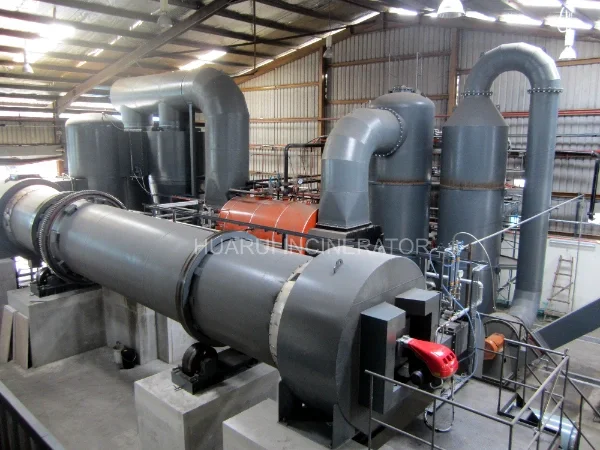
Top 10 Advantages of Rotary Kiln Incinerators


As industries and municipalities face increasing pressure to manage hazardous, medical, and industrial waste in a safe and compliant manner, incineration technology continues to play a critical role. Among the various incineration systems available today, rotary kiln incinerators are widely recognized for their versatility, stability, and ability to handle complex waste streams. Their adoption spans chemical plants, pharmaceutical facilities, hazardous waste treatment centers, and medical institutions.
This article explores the top 10 advantages of rotary kiln incinerators, explaining why they are often chosen for demanding waste disposal applications and how they perform in real-world operating conditions.
1. Exceptional Waste Treatment Flexibility
One of the most significant rotary kiln advantages is its ability to process a wide variety of waste types. Rotary kiln incinerators can handle solid, liquid, sludge, and semi-solid waste simultaneously. This flexibility is especially valuable for facilities that generate mixed waste streams, such as chemical manufacturing plants or hazardous waste treatment centers.
The rotating motion of the kiln ensures that waste is continuously agitated, exposing new surfaces to high temperatures and oxygen. This makes the system effective for destroying complex organic compounds, contaminated packaging, spent catalysts, and pharmaceutical residues without the need for extensive pre-treatment.
2. Stable and Uniform Combustion Process
The inclined, rotating cylindrical design of a rotary kiln promotes uniform heat distribution and consistent residence time. As waste slowly moves through the kiln, it undergoes drying, volatilization, combustion, and burnout in a controlled sequence.
This staged combustion process improves thermal efficiency and ensures more complete destruction of harmful substances. Compared with fixed-bed or static incinerators, rotary kilns offer greater operational stability, even when waste composition fluctuates.
3. High Destruction Efficiency for Hazardous Compounds
Rotary kiln incinerators are particularly effective at destroying hazardous and toxic materials. Operating temperatures typically range from 850°C to over 1,200°C, depending on waste characteristics. At these temperatures, most organic pollutants, including solvents, pesticides, and pharmaceutical compounds, are reliably decomposed.
When combined with a secondary combustion chamber (afterburner), the system achieves high destruction and removal efficiency (DRE), making it suitable for strict regulatory environments. This is one of the key rotary kiln advantages for hazardous waste incineration projects.
4. Continuous Operation and High Throughput
Unlike batch incineration systems, rotary kiln incinerators are designed for continuous operation. Waste is fed steadily into the kiln, allowing facilities to treat large volumes without frequent shutdowns.
This continuous processing capability improves productivity and reduces downtime. For industrial users with consistent waste generation, it translates into smoother operations and better integration with upstream production processes.
5. Effective Ash and Residue Handling
The rotating action of the kiln not only improves combustion but also helps manage ash and inert residues efficiently. As waste moves through the kiln, non-combustible materials are gradually discharged at the outlet as bottom ash or clinker.
This controlled discharge reduces the risk of slag buildup and blockages, which are common issues in other incinerator types. Properly designed rotary kiln systems allow for easier ash cooling, collection, and downstream disposal or stabilization.
6. Strong Adaptability to Changing Waste Characteristics
In real-world operations, waste composition is rarely constant. Moisture content, calorific value, and chemical composition can vary significantly from batch to batch. A major rotary kiln advantage is its ability to adapt to these variations without compromising performance.
Operators can adjust rotational speed, feed rate, and combustion air supply to maintain stable incineration conditions. This adaptability makes rotary kilns well-suited for contract incineration facilities that treat waste from multiple sources.
7. Compatibility with Advanced Air Pollution Control Systems
Modern rotary kiln incinerators are typically integrated with comprehensive flue gas treatment systems. These may include secondary combustion chambers, waste heat boilers, quench towers, scrubbers, bag filters, and activated carbon injection units.
This compatibility allows facilities to meet stringent emission standards for particulate matter, acid gases, heavy metals, and dioxins. As environmental regulations continue to tighten globally, this system-level flexibility is a critical advantage.
For a detailed overview of industrial-grade rotary kiln incinerator solutions and configurations, you can refer to this professional resource:
rotary kiln incinerator
8. Long Service Life and Robust Mechanical Design
Rotary kiln incinerators are built for demanding industrial environments. The kiln shell, refractory lining, and drive system are engineered to withstand high temperatures, thermal cycling, and abrasive waste materials.
With proper operation and routine maintenance, a rotary kiln system can deliver reliable service over many years. This durability reduces the frequency of major overhauls and supports long-term waste treatment planning.
9. Scalability for Different Project Sizes
Another practical rotary kiln advantage is scalability. Rotary kiln incinerators can be designed in a wide range of capacities, from small units for medical or laboratory waste to large systems for industrial and hazardous waste treatment centers.
This scalability allows project developers and plant operators to select a system that matches current needs while leaving room for future expansion. Modular auxiliary systems further enhance flexibility during project upgrades.
10. Proven Technology with Global Application Experience
Rotary kiln incineration is a mature and widely proven technology. It has been deployed across diverse industries and regions, operating under different regulatory frameworks and waste profiles.
This extensive track record reduces technical risk for new projects. Engineers, operators, and regulators are generally familiar with rotary kiln systems, which simplifies permitting, training, and long-term operation.
Conclusion
The advantages of rotary kiln incinerators lie in their versatility, reliability, and ability to handle complex waste streams under strict environmental requirements. From flexible waste acceptance and stable combustion to long service life and emission control compatibility, rotary kiln systems offer a comprehensive solution for modern waste incineration challenges.
For facilities dealing with hazardous, medical, or industrial waste, rotary kiln incinerators remain one of the most dependable and adaptable technologies available today. Careful system design, proper operation, and integration with advanced gas treatment equipment are essential to fully realize these benefits.
Related news

Contact us