Clear records
history record

News
Turnkey Incineration Plant vs Standalone Equipment: Which Is Right for Your Project?


When planning a waste treatment solution, one of the most critical decisions is whether to invest in an incineration plant turnkey system or assemble a facility using standalone incineration equipment. This choice affects not only your upfront investment and implementation timeline, but also long-term operational efficiency, compliance, and scalability.
For organizations such as hospitals, municipalities, industrial facilities, and waste management companies, understanding the practical differences between these two approaches is essential. In this article, we break down the real-world implications of each option to help you make an informed decision.
What Is a Turnkey Incineration Plant?
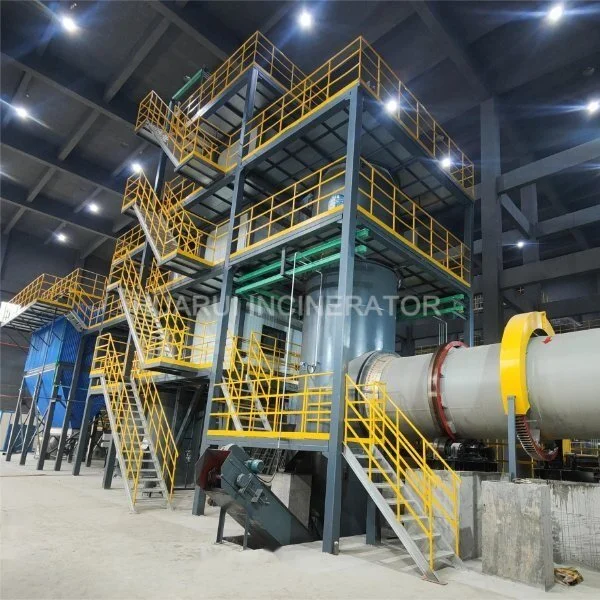
A turnkey incineration plant is a complete, ready-to-operate solution delivered by a single supplier. From design and engineering to manufacturing, installation, commissioning, and operator training, everything is handled under one contract.
With a turnkey system, companies like Huarui Incinerator provide an integrated package that includes:
Waste feeding system
Primary and secondary combustion chambers
Flue gas treatment system
Ash handling system
Control and monitoring system
Civil engineering and installation guidance
Once the system is installed, it is essentially “ready to run,” minimizing the need for additional coordination between multiple vendors.
What Is Standalone Incineration Equipment?
Standalone equipment refers to purchasing individual components separately—often from different manufacturers—and assembling them into a complete incineration system.
For example, a project might involve sourcing:
A combustion chamber from one supplier
A burner system from another
A flue gas treatment unit from a third party
Control systems from yet another vendor
This approach gives flexibility but requires significant engineering integration and project management expertise.
Key Differences That Matter in Practice
1. Project Complexity and Coordination
The biggest practical difference lies in execution.
A turnkey incineration plant simplifies the process by assigning full responsibility to one supplier. This reduces:
Communication gaps
Design inconsistencies
Installation delays
In contrast, standalone equipment projects often involve multiple contractors, increasing the risk of misalignment. Even small incompatibilities between components can lead to costly delays.
If your organization lacks strong in-house engineering capabilities, turnkey solutions significantly reduce operational friction.
2. System Integration and Performance
Incineration is not just about burning waste—it’s about achieving controlled combustion, emissions compliance, and energy efficiency.
Turnkey systems are engineered as a cohesive unit. Components are designed to work together, ensuring:
Stable combustion temperatures
Efficient heat recovery (if applicable)
Consistent emissions control
With standalone equipment, integration depends heavily on your engineering team. Improper matching of components can lead to:
Incomplete combustion
Higher emissions
Increased fuel consumption
This is a common issue in projects that prioritize low upfront cost over system compatibility.
3. Compliance and Environmental Standards
Environmental regulations are becoming stricter worldwide, especially regarding:
Particulate matter
Dioxins and furans
Acid gases (SOx, NOx)
Turnkey incineration plant providers typically design systems to meet specific regional standards from the outset. This includes properly sized flue gas treatment systems and automated monitoring.
With standalone equipment, compliance becomes your responsibility. You must ensure that all components collectively meet regulatory requirements, which can be technically demanding.
4. Installation Time and Project Timeline
Time-to-operation is often underestimated.
Turnkey solutions offer faster deployment because:
Engineering is pre-integrated
Installation is standardized
Commissioning is handled by experienced teams
Standalone setups, on the other hand, require:
Custom engineering design
Extended procurement cycles
Multiple installation phases
Delays in one component can stall the entire project.
5. Cost Structure: Upfront vs Hidden Costs
At first glance, standalone equipment may appear more affordable. However, this often excludes hidden costs such as:
Engineering design fees
Integration and testing
Troubleshooting and rework
Extended downtime
Turnkey systems usually have a higher initial price but provide cost certainty and reduce the risk of unexpected expenses.
Over the lifecycle of the plant, turnkey solutions often prove more economical due to optimized performance and lower maintenance complexity.
6. After-Sales Support and Accountability
With a turnkey incineration plant, there is a single point of accountability. If issues arise, the supplier is responsible for diagnosing and resolving them.
In contrast, standalone systems can lead to “vendor blame shifting,” where each supplier attributes faults to others. This complicates maintenance and prolongs downtime.
Reliable after-sales support is particularly important for critical applications such as:
Medical waste disposal
Hazardous industrial waste treatment
When Should You Choose a Turnkey Incineration Plant?
A turnkey solution is typically the better choice when:
You need a fast and reliable deployment
Your team lacks specialized incineration engineering expertise
Regulatory compliance is strict
Operational stability is a priority
You want a single point of responsibility
For example, hospitals or government projects often favor turnkey systems because downtime or compliance failures are not acceptable.
If you are exploring complete solutions, you can review available systems here:
incineration plant turnkey: https://www.hrincinerator.com/product
When Does Standalone Equipment Make Sense?
Standalone equipment may be suitable if:
You have a strong in-house engineering team
You require highly customized configurations
You are upgrading an existing facility rather than building from scratch
Budget constraints prioritize phased investment
This approach is more common in large industrial operations with dedicated technical teams capable of managing integration.
Real-World Considerations Often Overlooked
Operator Training
Turnkey suppliers typically provide structured training programs, ensuring operators understand:
Combustion control
Safety protocols
Routine maintenance
Standalone systems may lack unified training, leading to inconsistent operation.
Maintenance and Spare Parts
Integrated systems often use standardized components, making spare parts management easier.
With standalone setups, parts may come from multiple vendors, complicating inventory and increasing downtime during repairs.
Scalability
Turnkey plants are often modular, allowing future expansion with minimal disruption.
Standalone systems can be harder to scale because new components must be re-integrated into an already complex setup.
Why Many Projects Are Moving Toward Turnkey Solutions
The trend toward turnkey incineration plants is driven by:
Increasing environmental regulations
Demand for operational reliability
Shorter project timelines
Limited availability of specialized engineering talent
Companies like Huarui Incinerator focus on delivering integrated systems that reduce uncertainty and ensure consistent performance in real-world conditions.
Final Thoughts
Choosing between a turnkey incineration plant and standalone equipment is not just a technical decision—it’s a strategic one.
If your priority is efficiency, compliance, and long-term reliability, a turnkey solution provides a structured and lower-risk path. If your organization has the expertise and resources to manage complexity, standalone equipment offers flexibility but comes with greater responsibility.
In most cases, especially for new installations, the advantages of an incineration plant turnkey solution outweigh the perceived cost savings of assembling individual components.
Related news

Contact us