
Clear records
history record

News
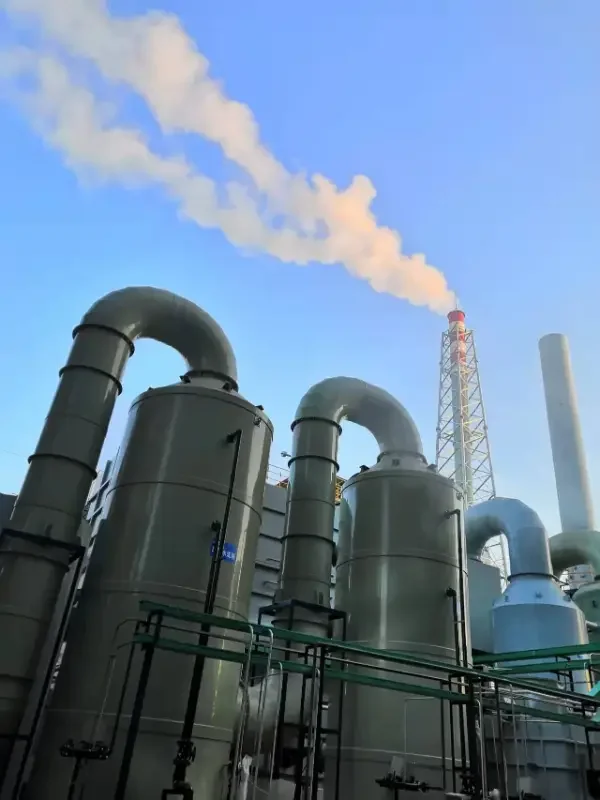
Understanding of basic knowledge of incinerators


Incineration is a high-temperature heat treatment technology, which uses a certain amount of excess air to carry out oxidative combustion reaction with the processed organic waste in the incinerator, and the harmful and toxic substances in the waste are oxidized and pyrolyzed at high temperature and destroyed. It can simultaneously realize waste harmlessness, volume reduction, and recycling.
1. Purpose of incineration
Incinerate waste as much as possible to make the incinerated substances harmless and reduce volume to the greatest extent, and minimize the generation of new pollutants to avoid secondary pollution.
2. Types of waste to be treated
A. Solid waste, liquid waste, gas waste, and even hazardous waste (also including solid, liquid, and gas).
B. Incineration is suitable for treating waste with many organic components and high calorific value. For some low calorific value wastes, a large amount of fuel needs to be supplemented during incineration, which will increase operating costs. In actual operation, high and low calorific value wastes can be mixed to reduce operating costs. Resources can also be recovered during processing, which can also reduce Effects on running costs.
3. Incineration treatment indicators
A. Reduction ratio: the percentage of the mass of combustible waste reduced after incineration to the total amount of waste added.
B. Loss on ignition: The percentage of the mass of the incineration residue reduced after burning at (600±25)°C for 3 hours to the mass of the original incineration residue.
C. Incineration efficiency and destruction removal rate
Incineration efficiency: the percentage of carbon dioxide concentration in the flue exhaust gas to the sum of carbon dioxide and carbon monoxide. Incineration removal rate: the percentage reduction of an organic substance after incineration.
D. Flue gas emission concentration limit index (related national control standards)
4. Waste incineration control parameters
Incineration temperature, stirring and mixing degree, gas residence time (commonly referred to as 3T) and excess air rate.
A. Incineration temperature
The temperature at which harmful components of waste are oxidized and decomposed at high temperature until they are destroyed. Raising the incineration temperature is conducive to the decomposition and destruction of toxic substances in waste, and can suppress the generation of black smoke. However, excessive incineration temperature not only increases fuel consumption, but also increases the volatilization of metals and the amount of nitrogen oxides in waste, causing secondary pollution.
The temperature range of most organic matter is between 800~1100℃, usually around 800~900℃.
(1) For waste gas deodorization treatment, the incineration temperature is 800~950°C.
(2) When the waste particles are between 0.01~0.05μm, and the oxygen supply concentration and residence time are appropriate, the incineration temperature is 900~1100℃.
(3) Chlorine-containing waste, when the temperature is above 800-850°C, chlorine gas can be converted into hydrogen chloride, which can be recycled or washed with water to remove it. Chlorine gas will be formed below 800°C, which is difficult to remove.
(4) Wastes containing alkaline earth metals are generally controlled below 750~800°C, because alkaline earth metals and their salts are generally low-melting point compounds. When the ash content in the waste is too small to form high-melting point slag, these slags are easy to be mixed with the incinerator. Corrosion of refractory materials and metal parts will damage the furnace lining and equipment.
(5) When incinerating waste containing cyanide, the temperature reaches 800~900°C, and almost all cyanide is decomposed.
(6) When incinerating wastes that may produce nitrogen oxides (NOx), the temperature should be controlled below 1500°C. Excessively high temperatures will cause (NOx) to be produced rapidly.
(7) High-temperature incineration is the best way to prevent and control PCDD and PCDF. It is estimated that these toxic organics will begin to be destroyed above 925°C. Sufficient air and waste gas residence time in the high-temperature zone can further reduce the destruction temperature.
B. Residence time: the time required for the harmful components in the waste to be oxidized and burned to make the harmful substances into harmless substances under the incineration conditions in the incinerator.
(1) For garbage incineration, if the temperature is maintained between 850~1100℃, there is good stirring and mixing, so that the moisture in the garbage is easy to evaporate, and the residence time of the combustion gas in the combustion chamber is about 1~2S.
(2) For general organic waste liquid, under good atomization conditions and normal incineration temperature conditions, the residence time required for incineration is about 0.3~2S. In practice, 0.6~1S is often used, and the waste liquid containing cyanide compounds is generally around 3S.
(3) For exhaust gas, if it is used for deodorization, the residence time is generally below 1S. If the exhaust gas is produced in the oil refining project, it only needs to stay for 0.3S at 650°C.
C. Mixing intensity: To complete the combustion of waste and reduce the pollutant gas, it is necessary to fully contact the exhaust gas with the combustion-supporting air, and fully mix the combustion gas and the combustion-supporting air.
D. Excess air: In the actual combustion system, oxygen and combustible substances cannot fully achieve the ideal mixing and reaction. In order to complete the combustion, it is difficult to complete the combustion only by supplying the theoretical air volume, and it is necessary to add more combustion-supporting air volume than the theoretical air volume, so that the waste and air can be completely mixed and burned.
Theoretical air volume required for waste combustion: solid waste: A0=1.01×Q (waste calorific value)/1000+0.5
Liquid waste: A0=0.203×Q (calorific value of waste)×4.18/1000+2
Gas waste: A0=0.2×4.18×Q (waste calorific value) /1000+0.03
The actual amount of air required for waste combustion: A= A0×α (air excess coefficient: solid 1.8~2.2, liquid 1.4~1.5, gas 1.2)

Related news

Contact us