
Clear records
history record

News
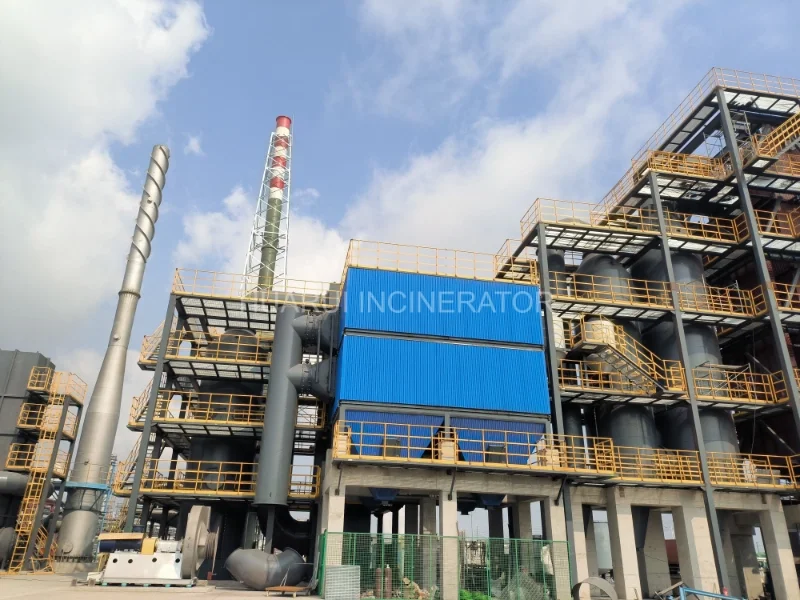
How to Calculate Incinerator Capacity for Your Project


1. Introduction
Choosing the correct incinerator size is one of the most critical decisions in any waste treatment project. Whether you are planning a new facility or upgrading an existing system, understanding incinerator capacity calculation ensures that your equipment operates efficiently, meets environmental regulations, and avoids unnecessary costs.
For companies working with industrial or hazardous waste, selecting the wrong capacity can lead to underperformance, excessive fuel consumption, or even regulatory non-compliance. This guide provides a step-by-step approach to determining the ideal incinerator capacity for your specific application.
2. What Does Incinerator Capacity Mean?
Incinerator capacity refers to the amount of waste that can be safely and effectively processed within a given time period. It is typically measured in:
kg/hour (kg/h)
tons/day (t/day)
For example:
Small systems: 10–50 kg/h
Medium systems: 50–300 kg/h
Large industrial systems: 1–50 tons/day
A properly sized system ensures complete combustion, stable operation, and compliance with emission standards.
3. Step 1: Determine Daily Waste Volume
The first step in incinerator capacity calculation is to quantify how much waste your facility generates.
Key data to collect:
Total waste generated per day (kg/day)
Waste generation peaks (seasonal or operational fluctuations)
Type of waste (solid, liquid, sludge, medical, hazardous)
Example:
Factory generates: 2,400 kg/day
Peak factor: +20%
Adjusted volume:
2,400 × 1.2 = 2,880 kg/day
This adjusted value should always be used to avoid system overload.
4. Step 2: Identify Waste Characteristics
Not all waste burns the same. The composition directly affects the required incinerator size.
Important parameters:
Calorific value (kcal/kg)
Moisture content (%)
Ash content (%)
Chemical composition
Impact on capacity:
High moisture → reduces combustion efficiency
Low calorific value → requires more fuel
Hazardous waste → requires longer residence time
For a hazardous waste incinerator, conservative sizing is recommended to ensure complete destruction of toxic materials.
5. Step 3: Define Operating Hours
Incinerator capacity depends heavily on daily operating time.
Common operation modes:
8 hours/day (batch operation)
16 hours/day (semi-continuous)
24 hours/day (continuous industrial system)
Calculation formula:
[
\text{Required Capacity (kg/h)} = \frac{\text{Daily Waste (kg)}}{\text{Operating Hours}}
]
Example:
Daily waste: 2,880 kg
Operating time: 16 hours
Capacity:
2,880 ÷ 16 = 180 kg/h
6. Step 4: Apply Safety Margin
In real-world conditions, waste composition varies. A safety margin ensures stable operation.
Recommended margin:
Standard waste: +10–20%
Hazardous waste: +20–30%
Example:
Base capacity: 180 kg/h
Add 25% margin
Final capacity:
180 × 1.25 = 225 kg/h
This ensures your incinerator capacity calculation remains reliable under fluctuating conditions.
7. Step 5: Consider System Efficiency
Efficiency losses must be considered when sizing an incinerator.
Factors affecting efficiency:
Incomplete combustion
Heat loss
Poor airflow design
Operator skill level
A high-quality system from a professional manufacturer like Huarui Incinerator can significantly improve combustion efficiency and reduce required oversizing.
8. Step 6: Match Capacity with Incinerator Type
Different technologies have different performance characteristics.
Common types:
Rotary kiln incinerator → best for hazardous waste
Fixed chamber incinerator → suitable for small-scale use
Liquid waste incinerator → optimized for fluid waste
Mobile incinerator → flexible deployment
For complex waste streams, a rotary kiln system is typically the best choice due to its ability to handle mixed and hazardous materials.
9. Quick Capacity Calculation Example
Let’s combine all steps:
Waste: 3,000 kg/day
Operating hours: 20 h/day
Base capacity: 150 kg/h
Safety margin: +20%
Final result:
150 × 1.2 = 180 kg/h
Recommended incinerator size:
👉 180–200 kg/h system
10. Common Mistakes in Incinerator Sizing
Avoid these errors when performing an incinerator capacity calculation:
Underestimating waste volume
Ignoring peak loads
Not considering moisture content
Choosing equipment without safety margin
Selecting the wrong incinerator type
Ignoring hazardous waste requirements
These mistakes can lead to operational instability and increased costs.
11. Expert Tips for Accurate Capacity Selection
Always design for future expansion
Use real waste data, not estimates
Consult experienced engineers
Include emission compliance requirements
Consider automation and control systems
For large projects, working with an experienced supplier like Huarui Incinerator ensures accurate sizing and long-term performance.
12. Conclusion
Accurate incinerator capacity calculation is essential for achieving efficient, compliant, and cost-effective waste treatment. By evaluating waste volume, composition, operating time, and safety margins, you can select the right system for your needs.
Whether you are planning a small facility or a large hazardous waste incinerator project, proper sizing will directly impact your operational success and environmental compliance.
Call to Action
If you need help selecting the right incinerator capacity for your project, contact Huarui Incinerator for a customized engineering solution tailored to your waste type and operational requirements.
Related news

Contact us