

News
How Regulations Affect Incinerator Design


Environmental regulations have become one of the most important factors shaping modern waste treatment systems. Whether an incinerator is designed for medical waste, hazardous waste, municipal solid waste, or industrial by-products, compliance requirements directly influence its structure, combustion technology, emission control systems, monitoring equipment, and operational procedures.
For facility owners, understanding how regulations affect incinerator design is essential when planning new projects or upgrading existing plants. A compliant system not only reduces environmental risks but also helps avoid operational disruptions, permitting challenges, and future retrofit costs.
Why Regulations Matter in Incinerator Projects
Incineration remains one of the most effective methods for reducing waste volume and destroying harmful substances. However, the combustion process can generate emissions such as particulate matter, nitrogen oxides (NOx), sulfur dioxide (SO₂), carbon monoxide (CO), volatile organic compounds (VOCs), heavy metals, and dioxins.
To protect public health and the environment, governments around the world have introduced increasingly strict regulations covering:
Air emissions
Combustion efficiency
Residence time requirements
Operating temperatures
Continuous emissions monitoring
Ash handling and disposal
Energy recovery systems
Operator safety standards
As regulations evolve, incinerator manufacturers must integrate compliance requirements into every stage of system design.
Combustion Chamber Design and Regulatory Requirements
One of the most heavily regulated aspects of an incinerator is the combustion process itself.
Many environmental authorities require specific combustion temperatures and gas retention times to ensure complete destruction of hazardous compounds.
For example, regulations often require:
Primary chamber temperatures suitable for the waste stream
Secondary chamber temperatures exceeding 850°C or higher
Residence times of at least two seconds
Adequate oxygen levels during combustion
These requirements directly influence:
Chamber dimensions
Burner selection
Refractory materials
Air supply systems
Fuel consumption calculations
A poorly designed chamber may struggle to maintain required temperatures, resulting in incomplete combustion and excessive emissions.
Modern incinerator systems therefore incorporate advanced airflow management and automated temperature control systems to maintain stable operating conditions under varying waste loads.
Emission Control Systems Are Driven by Compliance Standards
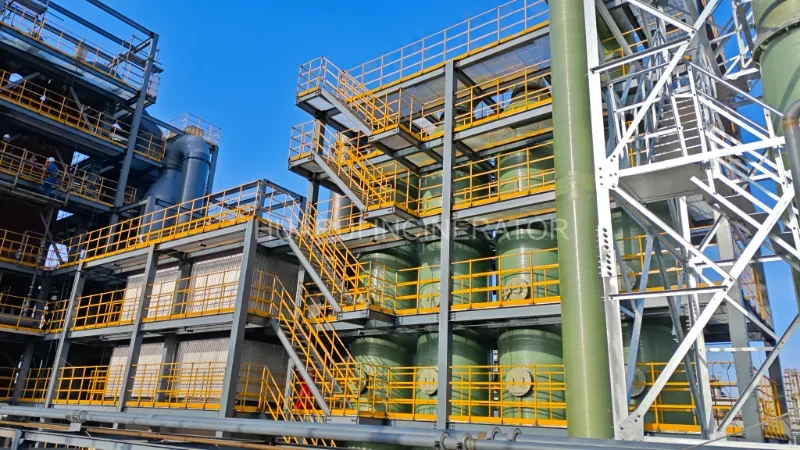
Environmental regulations have significantly increased the complexity of flue gas treatment systems.
Older incinerators often relied on basic particulate removal technologies. Today, many facilities require multi-stage air pollution control systems.
Typical components include:
Cyclone Separators
Used to remove larger particulate matter from flue gas streams before further treatment.
Baghouse Filters
Designed to capture fine dust particles and reduce particulate emissions.
Wet Scrubbers
Commonly used to remove acid gases such as hydrochloric acid (HCl) and sulfur dioxide.
Activated Carbon Injection Systems
Used for controlling dioxins, furans, mercury, and other heavy metal emissions.
Selective Non-Catalytic Reduction (SNCR) or Selective Catalytic Reduction (SCR)
Installed to reduce nitrogen oxide emissions where regulations demand lower NOx levels.
As emission limits become stricter, manufacturers must carefully integrate these systems into the overall plant layout without compromising operational efficiency.
Companies looking for compliant waste treatment equipment often evaluate complete solutions such as those available through Huarui Incinerator's incinerator product portfolio, where combustion performance and environmental compliance are considered together during system design.
Continuous Emissions Monitoring Requirements
Many jurisdictions now require continuous monitoring of key emission parameters.
This trend has transformed monitoring systems from optional accessories into essential design components.
Commonly monitored parameters include:
Oxygen (O₂)
Carbon monoxide (CO)
Nitrogen oxides (NOx)
Sulfur dioxide (SO₂)
Particulate matter
Flue gas temperature
Stack pressure
Continuous Emissions Monitoring Systems (CEMS) provide real-time data to operators and regulatory authorities.
As a result, incinerator designers must allocate space for sensors, sampling probes, analyzers, calibration systems, and data recording equipment.
The monitoring infrastructure must also be protected from heat, vibration, and corrosive gases to ensure long-term reliability.
Refractory Material Selection and Compliance
Regulations governing combustion performance indirectly affect refractory design.
High operating temperatures and longer retention times require durable refractory linings capable of maintaining thermal efficiency.
Key considerations include:
Thermal shock resistance
Corrosion resistance
Mechanical strength
Heat retention performance
Failure of refractory systems can lead to temperature fluctuations that compromise regulatory compliance.
Therefore, modern incinerator manufacturers often use high-grade refractory materials specifically selected for the intended waste stream and operating conditions.
Automation and Control Systems
Regulatory requirements increasingly emphasize operational consistency.
Manual operation alone is often insufficient to maintain stable combustion conditions.
Modern compliant incinerators therefore incorporate automated control systems capable of regulating:
Burner operation
Combustion air supply
Chamber temperatures
Draft control
Feeding rates
Emission control equipment
Advanced PLC-based control systems can automatically adjust operating parameters to maintain compliance while optimizing fuel consumption.
These technologies also simplify record keeping and regulatory reporting.
Ash Handling and Residue Management
Regulations do not end at the stack.
Bottom ash and fly ash generated during incineration must also be managed according to environmental standards.
Depending on the waste type, ash may require:
Hazardous waste classification testing
Stabilization treatment
Secure transportation
Approved disposal methods
Designers must therefore incorporate safe ash removal and storage systems into the facility layout.
This includes:
Sealed conveyors
Collection hoppers
Dust suppression measures
Storage containers
Proper ash management reduces worker exposure and minimizes secondary environmental contamination.
Energy Efficiency and Sustainability Requirements
Many countries are strengthening regulations related to energy recovery and carbon reduction.
As a result, incinerator design increasingly focuses on maximizing energy utilization.
Common solutions include:
Waste Heat Recovery
Heat generated during combustion can be recovered through boilers and heat exchangers.
Steam Generation
Recovered energy can produce steam for industrial processes.
Electricity Production
Large facilities may integrate turbine systems for power generation.
Combined Heat and Power (CHP)
Some installations utilize both thermal and electrical energy outputs.
Energy recovery systems not only improve efficiency but can also help facilities meet sustainability targets and regulatory expectations.
Design Flexibility for Future Regulations
One of the biggest challenges facing facility owners is regulatory uncertainty.
Emission standards that are acceptable today may become inadequate in the future.
Forward-thinking incinerator manufacturers often design systems with expansion capability, allowing future upgrades such as:
Additional filtration stages
Enhanced monitoring systems
New NOx reduction technologies
Improved automation platforms
This flexibility can significantly reduce future compliance costs and extend equipment service life.
Global Compliance Considerations
Organizations operating internationally often face different regulatory frameworks.
Examples include:
European Union Industrial Emissions Directive (IED)
U.S. Environmental Protection Agency (EPA) regulations
Local environmental ministry requirements
Regional air quality standards
As a result, incinerator designs may need customization depending on the installation location.
Experienced manufacturers typically evaluate local requirements during project planning to ensure smooth permitting and commissioning processes.
Conclusion
Environmental regulations have become one of the primary drivers of modern incinerator design. From combustion chamber dimensions and refractory selection to flue gas treatment systems and continuous monitoring equipment, nearly every component is influenced by compliance requirements.
Organizations planning new waste treatment facilities should view regulatory compliance not as a constraint but as a design foundation. Investing in a properly engineered incinerator helps improve operational reliability, reduce environmental risks, and support long-term sustainability goals.
As regulations continue to evolve, selecting an experienced supplier with strong technical capabilities and a thorough understanding of compliance requirements will remain essential for successful incineration projects.
Related news

Contact us