
Clear records
history record

News
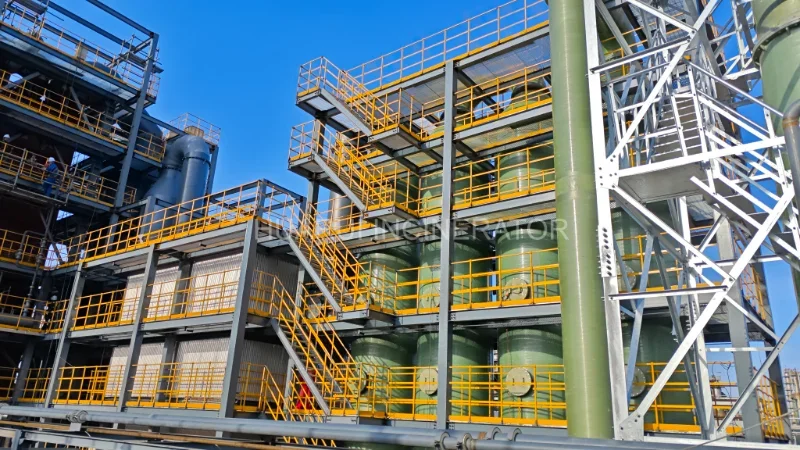
2026 Global Waste Incinerator Market Trends


As governments, municipalities, and industrial operators face increasing pressure to manage waste more efficiently, the global waste incinerator industry is entering a phase of structural adjustment rather than simple expansion. By 2026, incineration is no longer viewed only as a disposal method, but as an integrated environmental solution combining waste reduction, energy recovery, and emissions control. Understanding current incinerator market trends is essential for stakeholders involved in environmental engineering, public infrastructure, and industrial waste management.
This article examines the real drivers shaping the global waste incinerator market in 2026, focusing on regulatory forces, technology evolution, regional demand patterns, and practical procurement considerations.
Policy and Regulation as Core Market Drivers
Environmental regulation remains the most direct force influencing incinerator market trends. In many regions, landfill restrictions are becoming stricter due to land scarcity, groundwater contamination risks, and methane emission concerns. As a result, incineration is increasingly positioned as a controlled alternative that significantly reduces waste volume while allowing for energy utilization.
In Europe and parts of East Asia, waste-to-energy policies have matured, emphasizing stable operation, emissions transparency, and ash treatment standards. In developing economies, regulations are evolving more gradually, but public health concerns and urban population growth are accelerating policy enforcement. This regulatory divergence creates varied demand: advanced, high-capacity systems in mature markets and modular, cost-controlled systems in emerging regions.
For manufacturers and buyers alike, compliance is no longer optional. Incinerator systems must align with local emission limits, operational monitoring requirements, and long-term maintenance obligations.
Shift from Disposal Equipment to Integrated Systems
One of the most visible incinerator market trends in 2026 is the shift from standalone incinerators to integrated waste treatment systems. Buyers increasingly seek complete solutions that combine feeding systems, combustion chambers, flue gas treatment, and intelligent control units.
This shift is driven by operational reality. Poor integration between components often leads to inefficiency, unstable combustion, or excessive downtime. Modern buyers prioritize system reliability, automation, and ease of operation over simple equipment specifications.
Manufacturers with strong engineering backgrounds are responding by offering standardized yet configurable solutions. For example, many suppliers now provide turnkey incineration systems suitable for medical waste, industrial waste, or municipal solid waste, depending on combustion capacity and emission control design.
Energy Recovery Gains Practical Attention
Energy recovery is no longer a marketing concept but a practical evaluation criterion. In regions with rising energy costs or limited grid stability, waste incinerators that support heat or power recovery gain tangible advantages.
However, the market is also becoming more realistic. Instead of promising maximum theoretical energy output, buyers focus on stable, usable recovery rates and long-term system durability. Incinerator market trends show a preference for designs that balance energy utilization with operational simplicity rather than overly complex recovery systems that increase maintenance risk.
In industrial settings, recovered heat is often used directly in production processes, improving overall plant efficiency. This application-driven approach reflects a maturing market mindset.
Technology Focus: Emissions Control and Automation
Flue gas treatment technology continues to define market competitiveness. In 2026, compliance with emission standards depends less on combustion alone and more on downstream treatment, including dust removal, acid gas neutralization, and dioxin control.
At the same time, automation has become a baseline requirement. Intelligent control systems reduce operator dependence, stabilize combustion conditions, and generate operational data for compliance reporting. These features are particularly valued in medical and hazardous waste incineration, where consistency and traceability are critical.
From a buyer’s perspective, the most relevant incinerator market trends involve reliability and serviceability rather than experimental technologies. Systems that are easy to maintain, supported by clear documentation and remote technical support, are favored over complex designs with limited field validation.
Regional Demand Patterns in 2026
Global demand for waste incinerators remains uneven. Asia continues to account for a significant share of new installations, driven by urban expansion and industrial growth. Medical waste incineration has seen sustained demand following long-term public health investments.
In Africa and parts of the Middle East, demand is more project-based, often tied to government or international development initiatives. Here, durability, adaptability to local operating conditions, and operator training support are key purchasing factors.
Meanwhile, replacement and upgrading demand dominates mature markets. Facilities built a decade ago are being retrofitted with improved emission control systems or replaced entirely to meet updated regulations. This replacement cycle is an important but often underestimated incinerator market trend.
Procurement Trends: From Price to Lifecycle Value
A notable shift in procurement behavior is the move away from lowest-cost purchasing toward lifecycle evaluation. Buyers increasingly assess operating stability, spare parts availability, energy efficiency, and after-sales support.
This change reflects accumulated experience. Poorly supported equipment can lead to operational disruptions, regulatory penalties, and higher long-term costs. As a result, decision-makers now engage more deeply with manufacturers’ engineering capabilities and project experience.
For organizations sourcing incineration equipment, reviewing detailed system configurations and application-specific solutions has become standard practice. Many buyers explore comprehensive product options through established manufacturers’ portfolios, such as those presented in dedicated product sections like
waste incinerator systems and solutions, to evaluate suitability for real-world operating conditions.
Market Outlook: Stability Over Speculation
Looking toward the end of 2026, the waste incinerator market is expected to grow steadily rather than explosively. The strongest opportunities lie in specialization: medical waste, hazardous industrial waste, and decentralized municipal systems.
Incinerator market trends indicate that success will favor manufacturers and operators who emphasize compliance, system integration, and long-term operational performance. Innovation will continue, but adoption will remain conservative, guided by proven results rather than experimental concepts.
For buyers, this environment rewards careful technical evaluation and realistic expectation setting. Incineration is not a universal solution, but when applied correctly, it remains a critical component of modern waste management infrastructure.
Conclusion
The 2026 global waste incinerator market reflects a more mature, experience-driven industry. Regulatory pressure, system integration, emissions control, and lifecycle value now shape purchasing decisions more than capacity figures alone. Understanding these incinerator market trends allows stakeholders to make informed, practical choices that align with both environmental responsibility and operational reality.
Related news

Contact us