
Clear records
history record

News
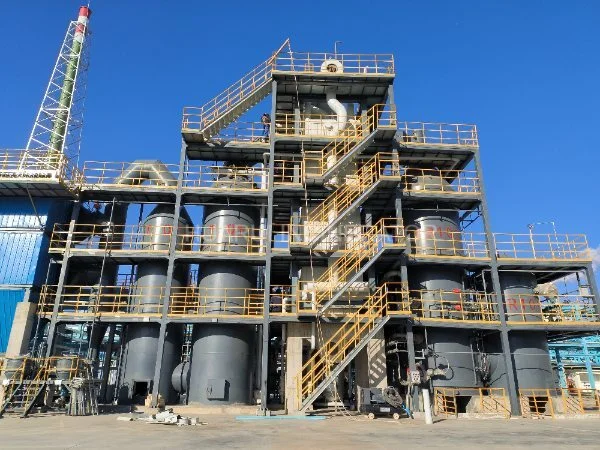
Steel Selection for High-Temperature Equipment: What Matters in Incinerator Design?


Selecting steel for high-temperature equipment is not simply a matter of choosing the grade with the highest temperature rating. In an incinerator, the steel shell, internal supports, anchors, doors, ducts, and other structural components experience different combinations of heat, thermal cycling, corrosion, mechanical stress, and gas exposure.
For this reason, incinerator steel material should be selected according to the actual service conditions of each component rather than applying one material throughout the entire system.
In a properly designed incinerator, refractory lining takes the primary heat load while the steel shell provides structural strength. Huarui Incinerator, for example, uses a steel furnace structure together with refractory and insulation layers to control heat transfer and protect the outer shell.
Why Steel Selection Matters in Incinerators
An incinerator may operate continuously for long periods, but its thermal conditions are rarely constant. Startup, shutdown, changes in waste composition, burner operation, and variations in combustion conditions can all create temperature fluctuations.
At the same time, combustion gases may contain corrosive components such as chlorides, sulfur compounds, and other aggressive substances depending on the waste being treated. High-temperature corrosion studies have shown that gases containing HCl, SO₂, SO₃, and phosphorus compounds can cause serious damage to metallic components.
This means steel selection needs to consider at least five factors:
Operating and peak temperature
Thermal cycling and expansion
Mechanical loading
Corrosive gas exposure
Protection provided by refractory and insulation
A steel grade that performs well in a relatively cool external shell may be unsuitable for an exposed internal component.
1. Start With the Actual Temperature of the Steel
The first mistake in material selection is to look only at the combustion temperature.
For example, an incinerator may have a combustion chamber operating at very high temperatures, but the external steel shell should be maintained at a much lower temperature because refractory and insulation layers separate the combustion zone from the shell.
This distinction is important.
The refractory lining acts as a thermal barrier between the hot combustion environment and structural steel. Industry guidance also recognizes that steel-plate incinerators require insulation between the refractory wall and the steel exterior.
Therefore, engineers should determine:
Internal combustion temperature
Refractory working temperature
Insulation thickness and performance
Expected steel surface temperature
Local hot spots around burners, doors, openings, and joints
The steel should then be selected based on its actual service temperature, not simply the furnace temperature.
2. Carbon Steel for the Main Structural Shell
For many incinerators, carbon steel remains a practical choice for the outer furnace shell and structural framework when these components are adequately protected from direct high-temperature exposure.
Its advantages are straightforward:
Good structural strength
Relatively easy fabrication and welding
Suitable for large equipment structures
Widely available
Compatible with conventional surface treatment and coatings
Huarui's rotary kiln incinerator, for instance, uses a steel shell with refractory insulation and an inner high-alumina refractory layer. This arrangement allows the steel structure to provide mechanical support while the refractory system handles the high-temperature environment.
For this type of application, the engineering objective is not to make the entire furnace from expensive heat-resistant alloy. Instead, it is to keep ordinary structural steel within an acceptable temperature range through proper refractory and insulation design.
3. Stainless Steel for Selected High-Temperature Components
Stainless steel becomes more relevant when components are exposed to elevated temperatures, oxidation, moisture, or corrosive gases.
However, "stainless steel" is not a single material with universal high-temperature performance. Different grades provide different combinations of oxidation resistance, mechanical strength, thermal expansion, and corrosion resistance.
Depending on the component and operating conditions, grades such as 304, 316, 309, or 310 may be considered for specific applications. The appropriate selection depends on temperature and service environment rather than simply choosing the most expensive grade.
For example, stainless steel may be considered for:
Burner-related components
High-temperature doors and fittings
Internal brackets
Gas-path components
Selected fasteners or anchors
Components exposed to corrosive atmospheres
But even stainless steel can suffer from high-temperature corrosion or cracking under unsuitable conditions. Material selection must therefore be linked to actual gas chemistry and temperature.
4. Refractory Lining Is Part of the Steel Selection Strategy
Steel and refractory should not be treated as two completely independent decisions.
The refractory lining determines how much heat reaches the steel. If the refractory system is poorly selected, damaged, or incorrectly installed, even an otherwise suitable steel structure can experience excessive thermal loading.
Huarui's incinerator designs use high-alumina refractory materials in high-temperature areas, while insulation is used to reduce heat transfer toward the steel shell.
Common refractory solutions include:
High-alumina refractory
Firebrick
Refractory castable
Insulating castable
Mullite-based materials
Silicon carbide materials for selected wear zones
The choice depends on temperature, abrasion, chemical attack, thermal cycling, and furnace configuration. Huarui's technical guidance also emphasizes that firebrick and castable selection should be based on the actual operating zone rather than assuming one lining material is suitable everywhere.
5. Consider Thermal Expansion and Thermal Cycling
High-temperature equipment does not simply become hot and stay at one temperature.
During startup, the steel heats up and expands. During shutdown, it contracts. If different components heat at different rates, additional stresses can develop around welds, supports, refractory anchors, and connections.
This is particularly important for:
Rotary kilns
Combustion chambers
Burner assemblies
Inspection doors
Expansion joints
Refractory anchors
The refractory system itself also expands and contracts. Huarui describes the use of internal stainless-steel anchors and expansion provisions in its furnace construction to accommodate alternating thermal stress.
Therefore, selecting an incinerator steel material should go together with checking thermal expansion, joint design, anchor configuration, and welding details.
6. Corrosion Resistance Depends on the Waste
Temperature is only one part of the problem.
A hazardous waste incinerator, pharmaceutical waste incinerator, medical waste incinerator, and industrial waste incinerator can produce significantly different combustion atmospheres.
Waste containing chlorine may generate HCl. Sulfur-containing materials can contribute sulfur oxides. Ash and condensate can create additional corrosion risks, particularly in areas where temperatures fluctuate.
This is why steel selection should consider the expected waste composition and gas chemistry.
For components exposed directly to aggressive flue gas, engineers may need to consider stainless steel, protective coatings, refractory protection, or other corrosion-control measures rather than relying solely on the nominal strength of the base steel.
7. Match Material Selection to Equipment Zones
A practical incinerator design normally uses different materials in different areas.
| Equipment Zone | Main Concern | Typical Material Approach |
|---|---|---|
| Outer furnace shell | Structural strength and heat transfer | Carbon steel with refractory/insulation |
| Primary combustion chamber | Heat, abrasion, ash | Steel shell with dense refractory lining |
| Secondary chamber | High gas temperature | Refractory-lined steel structure |
| Burner area | Localized high temperature | Heat-resistant components plus refractory |
| Flue gas duct | Temperature and corrosion | Steel selected according to gas conditions |
| Doors and access points | Thermal cycling and sealing | Suitable steel/stainless components with refractory |
| Refractory anchors | Heat and thermal expansion | Heat-resistant anchoring materials |
This zonal approach is more practical than specifying one steel grade for an entire incinerator.
8. Selection Should Also Consider Fabrication
A technically suitable steel grade is not necessarily the best choice if it creates unnecessary fabrication problems.
Engineers need to consider:
Welding procedures
Plate thickness
Forming requirements
Heat treatment requirements
Availability of qualified welding processes
Dimensional tolerances
Maintenance and replacement requirements
Large incinerators contain welded shells, stiffeners, supports, doors, ducts, and other fabricated assemblies. Material selection should therefore be compatible with the overall fabrication process.
9. Check the Complete Incinerator, Not Just the Steel
The best material selection is ultimately part of a complete equipment design.
When evaluating an incinerator, buyers and engineers should ask:
What type of waste will be treated?
What are the normal and maximum temperatures?
Which components are directly exposed to combustion gases?
What refractory materials are being used?
How is the steel shell insulated?
Where are the expected hot spots?
How will thermal expansion be accommodated?
What corrosive gases may be generated?
Which components require stainless or heat-resistant materials?
How will refractory and steel components be inspected and maintained?
This approach is more useful than simply asking for a "high-temperature steel incinerator."
For companies evaluating complete waste treatment equipment, Huarui Incinerator provides different types of waste incineration systems, including rotary kiln, liquid waste, waste gas, pyrolysis, and other configurations. Its product range can be reviewed through the Huarui Incinerator product center.
Conclusion
Steel selection for high-temperature equipment is fundamentally a system engineering problem. The right material depends on temperature, gas chemistry, mechanical loading, thermal cycling, refractory protection, and the specific location of each component.
For an incinerator, carbon steel can remain an effective structural material when it is properly protected by refractory and insulation. Stainless and heat-resistant steels have their place in components exposed to higher temperatures or more aggressive operating conditions. The key is to match each material to its actual service environment.
For procurement teams and engineers, the most reliable approach is therefore to evaluate steel, refractory, insulation, thermal expansion, and corrosion protection together. This results in a more durable incinerator structure and reduces the risk of premature damage caused by treating material selection as an isolated specification
Related news

Contact us