
Clear records
history record

News
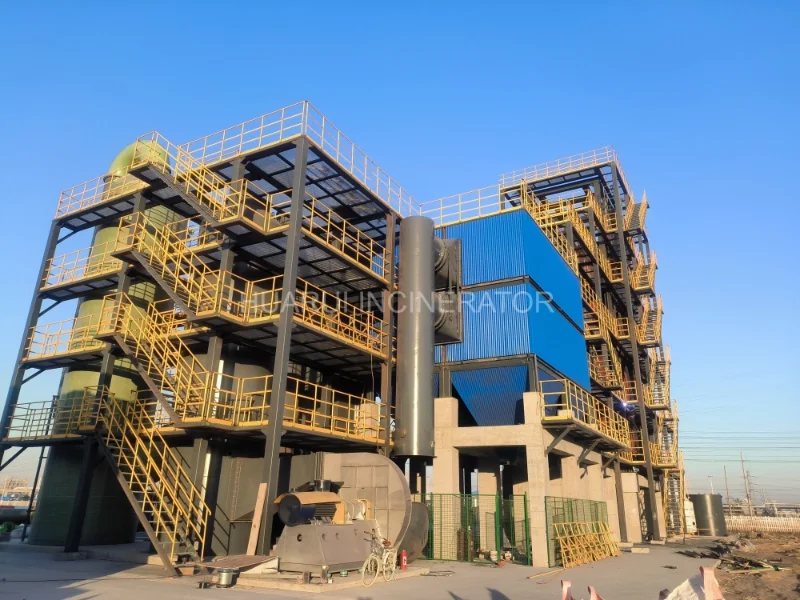
Why Secondary Combustion Chamber Matters


In modern waste incineration systems, regulatory pressure, environmental responsibility, and operational efficiency are no longer optional considerations. They are decisive factors that determine whether an incineration project is viable in the long term. Among the many components that influence system performance, the secondary combustion chamber plays a particularly critical role. While often viewed as an auxiliary unit, in practice it is central to achieving complete combustion, stable emissions, and regulatory compliance.
This article explains why the secondary combustion chamber matters, how it works in real-world applications, and what operators should consider when selecting or upgrading incineration equipment.
Understanding the Role of a Secondary Combustion Chamber
A secondary combustion chamber, sometimes referred to as an afterburner chamber, is installed downstream of the primary combustion chamber. Its primary function is to further oxidize combustible gases, unburned hydrocarbons, odors, and toxic compounds generated during the initial waste burning process.
In the primary chamber, waste composition can be highly variable. Medical waste, hazardous waste, animal carcasses, and industrial residues often contain moisture, plastics, and chemical compounds that do not fully burn in a single stage. As a result, flue gas leaving the primary chamber may still contain harmful substances. The secondary chamber provides a controlled high-temperature environment to ensure these residual components are fully destroyed.
Why Complete Combustion Is Not Guaranteed in One Stage
In theory, complete combustion requires sufficient temperature, residence time, and turbulence. In practice, achieving all three simultaneously in the primary chamber is difficult due to fluctuating waste feed rates and inconsistent calorific values.
For example, when low-calorific or high-moisture waste is introduced, combustion temperature may drop temporarily. During these fluctuations, incomplete combustion can occur, leading to the formation of carbon monoxide, dioxins, furans, and volatile organic compounds. A secondary combustion chamber compensates for these variations by maintaining stable operating conditions independent of waste feeding dynamics.
Environmental Compliance and Emission Control
One of the strongest arguments for the importance of a secondary combustion chamber is environmental compliance. Emission standards around the world are becoming increasingly stringent, particularly for medical and hazardous waste incineration.
Secondary chambers typically operate at temperatures above 850°C, and in many cases above 1100°C, with sufficient gas residence time to ensure the destruction of toxic compounds. This high-temperature oxidation significantly reduces harmful emissions before flue gas enters downstream treatment systems such as scrubbers, bag filters, or chimneys.
Without a properly designed secondary chamber, it becomes extremely difficult to meet emission limits consistently, especially during start-up, shutdown, or waste composition changes.
Odor Control in Practical Operations
Odor complaints are one of the most common operational challenges faced by incineration facilities, particularly those located near urban or semi-urban areas. Odors are usually caused by partially combusted organic compounds escaping the primary chamber.
A secondary combustion chamber effectively eliminates these odors by oxidizing odor-causing molecules at high temperatures. From a practical standpoint, this directly improves community acceptance, reduces complaints, and lowers the risk of forced shutdowns by local authorities.
For operators, this means smoother daily operations and fewer external disruptions.
Safety and Operational Stability
Incomplete combustion is not only an environmental issue; it is also a safety concern. Unburned combustible gases entering downstream equipment can pose explosion risks, especially in enclosed ducts or heat recovery systems.
By ensuring thorough oxidation of flue gases, the secondary combustion chamber enhances overall system safety. It stabilizes combustion conditions and reduces temperature fluctuations further along the gas path. This stability protects auxiliary equipment and extends service life, reducing unplanned maintenance and downtime.
Secondary Combustion Chamber Design Considerations
Not all secondary combustion chambers deliver the same performance. Design quality has a direct impact on effectiveness and operating cost.
Key design factors include:
Temperature control: Reliable burners and control systems are required to maintain consistent high temperatures.
Residence time: Adequate chamber volume ensures flue gases remain at target temperature long enough for complete oxidation.
Refractory lining: High-quality refractory materials are essential to withstand thermal stress and chemical corrosion.
Air mixing: Proper turbulence improves oxidation efficiency and reduces fuel consumption.
A well-designed chamber balances performance with energy efficiency, minimizing auxiliary fuel use while maintaining compliance.
Fuel Efficiency and Long-Term Cost Control
Although a secondary combustion chamber requires additional fuel input, it can actually reduce long-term operating costs when properly engineered. Stable combustion minimizes soot formation, reduces maintenance on downstream pollution control devices, and prevents regulatory penalties or forced retrofits.
In many installations, the improved combustion efficiency also allows for better integration with heat recovery systems, supporting energy reuse without compromising emission control.
Application Scenarios Where Secondary Chambers Are Essential
Certain waste types make secondary combustion chambers indispensable rather than optional:
Medical and infectious waste, where complete destruction of pathogens is mandatory
Hazardous and chemical waste, which may generate toxic byproducts during initial combustion
Animal carcasses and organic waste, prone to odor and incomplete combustion
Industrial waste with plastics or solvents, producing complex flue gas compositions
In these scenarios, a secondary combustion chamber is not merely a compliance feature but a functional necessity.
Choosing a Reliable Incineration Solution
When evaluating incineration equipment, operators should consider the secondary combustion chamber as an integral part of the system rather than an add-on. Manufacturer experience, proven installations, and engineering customization are critical factors.
For operators seeking engineered incineration systems with integrated secondary chamber solutions, it is worth reviewing professional designs and configurations available through specialized manufacturers. You can explore practical system configurations and equipment options through this dedicated page on secondary combustion chamber incinerator products, which illustrates how secondary chambers are incorporated into complete waste treatment solutions.
Final Thoughts
The importance of a secondary combustion chamber goes far beyond technical specification sheets. It directly influences emission performance, operational safety, community acceptance, and long-term system reliability. In an era of tightening environmental regulations and heightened public scrutiny, it has become a cornerstone of responsible incineration system design.
For facility owners and engineers alike, investing in a properly designed secondary combustion chamber is not simply about meeting today’s standards. It is about ensuring operational resilience and environmental responsibility for years to come.
Related news

Contact us