
Clear records
history record

News
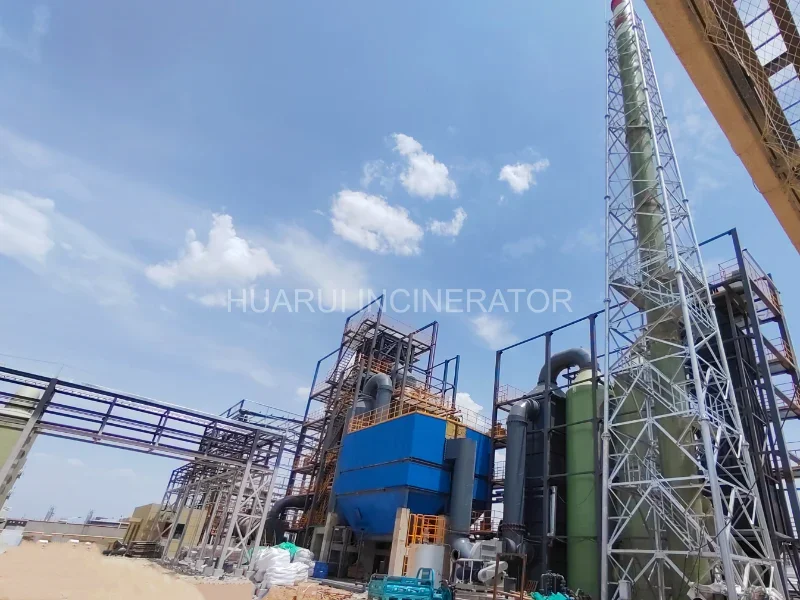
What Is a Rotary Kiln Incinerator? Complete Guide 2025


A rotary kiln incinerator is one of the most advanced and reliable technologies for treating complex waste streams, especially when dealing with hazardous, industrial, and medical waste. In 2025, this technology continues to be the preferred choice for high-risk waste treatment plants, EPC contractors, and environmental engineering firms. If you are planning a new project or upgrading your current hazardous waste incinerator system, understanding how a rotary kiln works and why it is so effective is essential.
1. Introduction to Rotary Kiln Incineration
A rotary kiln incinerator is a cylindrical, refractory-lined furnace that rotates slowly while operating at extremely high temperatures. This rotational movement allows for thorough mixing of waste materials, creating conditions ideal for complete combustion. Compared with conventional fixed-chamber incinerators, rotary kilns tolerate great variability in waste type, moisture level, and calorific value.
Because these systems are engineered for stability and uniform heat distribution, they have become the global standard for hazardous waste incinerator facilities in chemical plants, industrial parks, medical centers, and national waste treatment hubs.
2. How a Rotary Kiln Incinerator Works
The operating principle of a rotary kiln incinerator is simple yet highly effective. Waste enters the inclined kiln at the higher end, and gravity combined with rotation ensures a continuous forward movement. As the waste passes through progressively hotter zones, it dries, ignites, combusts, and finally turns into ash.
The process typically includes:
Primary combustion chamber (rotary kiln) – operating around 800–1,200°C
Secondary combustion chamber (afterburner) – up to 1,200–1,400°C
Flue gas cooling – quench tower or heat exchanger
Air pollution control – scrubbers, activated carbon, and bag filters
Emission stack monitoring
This design ensures that a hazardous waste incinerator can achieve complete destruction of toxic compounds, making the rotary kiln a preferred solution for waste streams that require maximum safety and reliability.
3. Key Advantages of Rotary Kiln Incinerators
In 2025, the rotary kiln remains the leading technology for handling complex waste because it offers major benefits:
✔ Superior waste flexibility
A rotary kiln incinerator can treat solids, liquids, sludges, pastes, and even high-moisture waste. This adaptability is crucial for industrial facilities managing multiple waste types under one emission permit.
✔ Stable and continuous operation
Continuous rotation ensures even heat distribution and consistent burnout, improving the reliability of a hazardous waste incinerator system.
✔ High destruction efficiency
Modern kilns routinely achieve DRE > 99.99%, exceeding most emission standards worldwide for hazardous waste.
✔ Excellent control of residence time
Long residence time (45–90 minutes) ensures complete decomposition of toxic substances, including halogenated organics and pharmaceuticals.
✔ Strong safety performance
Rotary kilns maintain stable chamber pressure and airflow, minimizing the risk of backfire or incomplete combustion—essential for any hazardous waste incineration process.
4. Applications of Rotary Kiln Incineration in 2025
A rotary kiln incinerator is exceptionally versatile and is used in a wide range of industries, including:
Hazardous waste treatment centers
Chemical and petrochemical plants
Pharmaceutical manufacturing facilities
Medical waste treatment hubs
Oil & gas operations
Mining camps and remote industrial zones
Municipal solid waste co-processing
Any project requiring secure disposal of toxic or unstable waste will consider a rotary kiln-based hazardous waste incinerator as a core solution.
5. Technical Components of a Rotary Kiln Incinerator
To understand why this technology is so effective, it helps to look at its main components:
1. Refractory-lined rotary kiln
Designed to endure constant rotation and temperatures over 1,000°C, the kiln is the heart of the rotary kiln incinerator.
2. Secondary combustion chamber
This chamber boosts temperatures above 1,200°C to ensure complete destruction of hazardous organic compounds.
3. Burners and combustion air system
High-performance burners—often diesel, natural gas, or LPG—provide stable heat for a hazardous waste incinerator system.
4. Waste feeding system
Options include solid feeders, sludge pumps, liquid injectors, and sealed hazardous waste loading systems.
5. Air pollution control unit
This includes quench towers, dry scrubbers, wet scrubbers, bag filters, and activated carbon injection for dioxin control.
6. Continuous emission monitoring (CEMS)
Regulators in many regions require real-time monitoring of CO, NOx, SO₂, particulate matter, and HCl.
6. Emission Standards for Rotary Kiln Incinerators
Compliance is a core requirement for any hazardous waste incinerator. In 2025, most countries follow or reference:
EU Directive 2010/75/EU (IED)
US EPA 40 CFR Part 264/265 Subpart O
WHO medical waste guidelines
Local national emission standards
A modern rotary kiln incinerator is capable of meeting all of these regulations with proper APC (Air Pollution Control) configuration.
Typical limits include:
| Pollutant | Typical Limit |
|---|---|
| Particulate matter | < 30 mg/Nm³ |
| HCl | < 10 mg/Nm³ |
| Heavy metals | Strict trace limits |
| Dioxins/Furans | < 0.1 ng TEQ/Nm³ |
7. How to Select the Right Rotary Kiln Incinerator
When choosing a rotary kiln incinerator, engineers should evaluate:
✔ Waste characteristics
Type, composition, calorific value, and moisture content.
✔ Processing capacity
Common sizes range from 100 kg/h to over 10 tons/day.
✔ Operating cost
Fuel efficiency, refractory life, and maintenance needs.
✔ Emission requirements
Different countries impose different dioxin, NOx, and particulate limits.
✔ Burner and control system quality
A stable control system is essential for any hazardous waste incinerator to maintain safe operating conditions.
8. Conclusion
A rotary kiln incinerator remains the most advanced and versatile thermal treatment technology available in 2025. Its ability to safely eliminate toxic organic compounds, combined with high efficiency and regulatory compliance, makes it the leading solution for industrial and hazardous waste management.
Whether your project involves chemicals, pharmaceuticals, medical waste, or industrial residues, choosing a properly designed hazardous waste incinerator based on rotary kiln technology ensures safety, reliability, and long-term sustainability.
Related news

Contact us