
Clear records
history record

News
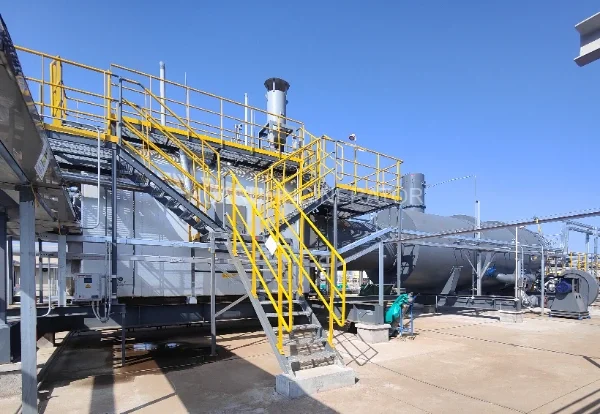
Incinerator Emission Requirements in EU, GCC and ASEAN


As waste volumes increase and environmental oversight tightens, industrial and medical incineration has come under closer regulatory scrutiny worldwide. Emission requirements are no longer limited to basic particulate control; they now extend to acid gases, heavy metals, persistent organic pollutants, and continuous monitoring obligations. For project developers, plant operators, and environmental managers, understanding how requirements differ across regions is essential for compliant design and long-term operation.
This article examines incinerator emission requirements in three influential regions—the European Union, the Gulf Cooperation Council, and the Association of Southeast Asian Nations—and translates regulatory language into practical engineering and operational considerations.
Why incinerator emissions are tightly regulated
Incineration remains a necessary solution for hazardous waste, medical waste, and certain industrial residues that cannot be safely landfilled. However, combustion processes generate pollutants such as:
Particulate matter (PM)
Nitrogen oxides (NOx)
Sulfur oxides (SOx)
Hydrogen chloride (HCl) and hydrogen fluoride (HF)
Dioxins and furans
Heavy metals such as mercury, cadmium, and lead
Modern regulations aim not only to limit these emissions but also to ensure that control systems operate reliably throughout the plant’s lifecycle. This has driven a shift toward standardized emission limits, mandatory monitoring, and documented operating procedures.
EU incinerator emission requirements: the benchmark standard
The European Union is widely regarded as setting the global benchmark for incinerator emission control. The core regulatory framework is derived from the Industrial Emissions Directive (IED), which integrates best available techniques (BAT) into enforceable limits.
Key emission limits and control philosophy
EU requirements emphasize low concentration thresholds and continuous compliance. Typical regulated parameters include:
Total dust (particulates)
NOx and SO2
CO as a combustion efficiency indicator
HCl, HF, and heavy metals
Dioxins and furans at extremely low allowable levels
Rather than treating limits in isolation, EU authorities assess the entire combustion and flue gas treatment chain. This means furnace design, residence time, combustion temperature, and air staging are evaluated alongside downstream equipment such as scrubbers and fabric filters.
Monitoring and documentation
Continuous emission monitoring systems (CEMS) are mandatory for most large incinerators. Operators must retain data, perform regular calibration, and demonstrate compliance during inspections. Even short exceedances can trigger reporting obligations or corrective action requirements.
From a practical standpoint, EU-oriented projects tend to adopt:
Multi-stage flue gas cleaning systems
Redundant safety interlocks
Automated control logic with data logging
Although these measures increase capital complexity, they significantly reduce regulatory risk over the long term.
GCC incinerator emission requirements: evolving and project-specific
In the GCC region, environmental regulation has strengthened considerably over the past decade, driven by rapid industrial growth and increased public awareness of air quality issues.
Regulatory structure
Unlike the EU, the GCC does not operate under a single unified emission directive. Each member state issues its own environmental regulations, often through environmental protection authorities or ministries. However, there is a clear trend toward harmonization and alignment with international standards.
Many GCC emission limits for incinerators are inspired by:
EU Industrial Emissions benchmarks
US EPA guidelines
World Health Organization recommendations
Practical implications for incinerator projects
In practice, emission requirements in GCC countries are often defined during the environmental impact assessment (EIA) stage. Authorities may specify target emission limits based on waste type, facility location, and proximity to residential areas.
Common expectations include:
Proven flue gas treatment technology
Stack emission testing before commissioning
Periodic third-party monitoring reports
For operators, this means that flexibility in system design is valuable. Incinerators designed with modular gas treatment components can adapt more easily to project-specific conditions and future regulatory tightening.
ASEAN incinerator emission requirements: diversity and transition
ASEAN countries represent a wide range of regulatory maturity levels. While some countries have well-defined emission standards, others are still transitioning from basic guidelines to more comprehensive frameworks.
National variation within ASEAN
Emission requirements are typically set at the national level. For example:
More industrialized ASEAN members often publish numeric emission limits and require stack testing.
Developing economies may rely on permitting conditions and general environmental quality standards.
Despite these differences, a common trend is visible: increasing reference to international best practices and gradual tightening of allowable emission levels.
Focus areas for compliance
In ASEAN projects, regulators often prioritize:
Visible emissions and odor control
Acid gas neutralization
Safe handling of fly ash and residues
Continuous monitoring is not always mandatory, but periodic testing by accredited laboratories is increasingly required. As regulations evolve, facilities designed to meet stricter standards from the outset face fewer retrofit challenges later.
Comparing compliance strategies across regions
Although emission limits and enforcement mechanisms differ, several common technical themes emerge across EU, GCC, and ASEAN jurisdictions:
Combustion stability matters
Proper furnace temperature, turbulence, and residence time are essential to minimize CO and organic pollutants before flue gas treatment begins.Multi-layer flue gas cleaning is becoming standard
Single-stage systems rarely meet modern expectations. Combined solutions—such as quenching, scrubbing, adsorption, and filtration—provide regulatory resilience.Data transparency is increasingly important
Even where continuous monitoring is not yet mandatory, regulators expect traceable records and credible test reports.Future-proofing reduces lifecycle risk
Designing for stricter standards than currently required often lowers total cost of ownership by avoiding premature upgrades.
Selecting compliant incinerator solutions
For organizations planning or upgrading incineration facilities, regulatory alignment should begin at the specification stage. Key questions to address include:
Which regional standard will the authority reference during approval?
Are emission limits fixed or subject to revision after commissioning?
What monitoring and reporting obligations apply over the plant’s operating life?
Working with suppliers that understand cross-regional compliance is critical. Equipment designed with adaptable control systems and scalable gas treatment capacity can support projects across EU-aligned, GCC-specific, and ASEAN-transitioning regulatory environments.
For practical examples of compliant systems and configurations, detailed product information can be reviewed at industrial incinerator solutions, where emission control considerations are integrated into equipment design rather than treated as add-ons.
Conclusion
Incinerator emission requirements in the EU, GCC, and ASEAN reflect different regulatory histories but a shared direction of travel: tighter limits, stronger oversight, and higher expectations for transparency. The EU sets the most stringent and structured benchmark, the GCC applies increasingly robust project-based controls, and ASEAN continues to move toward harmonized, enforceable standards.
For operators and developers, compliance is no longer a box-checking exercise. It is a design philosophy that influences combustion technology, gas cleaning systems, monitoring infrastructure, and operational discipline. By understanding regional requirements and anticipating future changes, stakeholders can deploy incineration solutions that are both environmentally responsible and operationally sustainable.
Related news

Contact us