
Clear records
history record

News
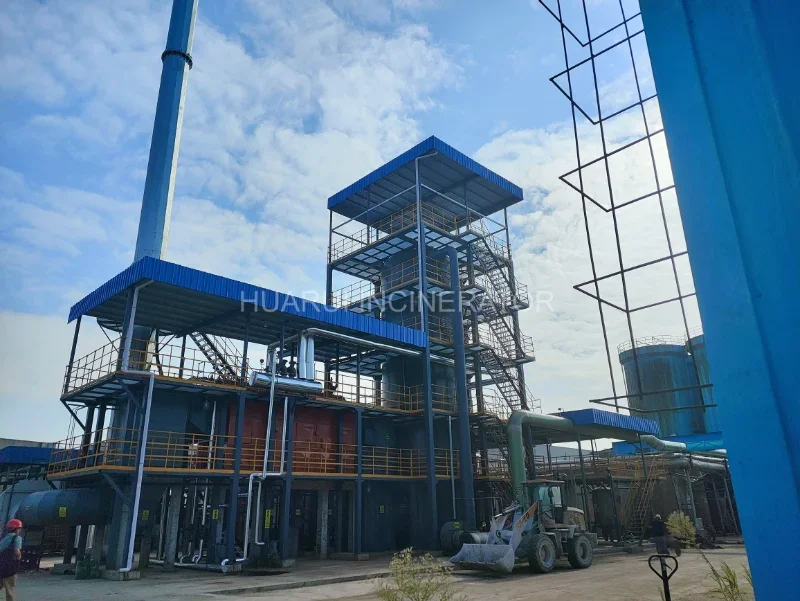
Understanding Residence Time in Incineration


Incineration remains one of the most widely used technologies for the safe treatment of hazardous, medical, and industrial waste. While discussions often focus on combustion temperature or flue gas treatment, one technical parameter is just as critical to performance and compliance: incinerator residence time. Understanding how residence time works, why it matters, and how it is controlled can help operators and decision-makers achieve more stable operation, higher destruction efficiency, and better environmental outcomes.
This article explains residence time in practical terms, linking theory with real-world incinerator design and operation.
What Is Residence Time in an Incinerator?
Residence time refers to the duration that waste materials or combustion gases remain inside specific zones of an incinerator under defined temperature and oxygen conditions. Depending on the context, residence time may describe:
Solid waste residence time on the grate or in the primary combustion chamber
Gas residence time in the secondary combustion chamber or afterburner
Ash residence time before discharge
In most regulations and engineering discussions, incinerator residence time usually means flue gas residence time at high temperature, because this directly affects the destruction of toxic organic compounds such as dioxins, furans, and volatile hydrocarbons.
Why Incinerator Residence Time Is So Important
Residence time is not an abstract design parameter. It has direct operational and environmental consequences.
1. Complete Destruction of Harmful Compounds
Certain organic pollutants require both high temperature and sufficient time to break down completely. Even if the temperature is high, insufficient residence time can allow partially oxidized compounds to exit the combustion chamber.
For medical waste, chemical waste, and hazardous materials, proper incinerator residence time ensures:
Higher destruction and removal efficiency (DRE)
Lower emissions of unburned hydrocarbons
Reduced risk of toxic byproduct formation
2. Regulatory Compliance
Environmental standards in many regions specify minimum residence time values, especially for secondary combustion chambers. A common requirement is ≥2 seconds at temperatures above 850–1100°C, depending on waste type and local regulations.
Failure to meet residence time requirements can lead to:
Non-compliance penalties
Operational shutdowns
Difficulty passing environmental inspections
3. Stable and Predictable Operation
Adequate residence time improves combustion stability. It allows fuel and air to mix thoroughly, reducing flame fluctuations, temperature swings, and incomplete burnout. This translates into smoother daily operation and less stress on downstream systems such as quench towers and scrubbers.
Residence Time in Different Incinerator Zones
Primary Combustion Chamber
In the primary chamber, solid waste residence time depends on:
Grate design (fixed grate, moving grate, rotary kiln)
Waste feeding rate
Waste calorific value and moisture content
For example, moving grate incinerators are designed to control waste progression speed, ensuring waste remains in the combustion zone long enough for drying, ignition, and burnout.
Although gas residence time is shorter here than in secondary chambers, proper primary chamber residence time ensures:
Reduced carryover of unburned solids
Lower CO and VOC levels in flue gas
Secondary Combustion Chamber (Afterburner)
This is where incinerator residence time becomes most critical.
The secondary chamber is designed to provide:
High temperature
Turbulent mixing
Sufficient gas residence time
By holding combustion gases at elevated temperature for a defined duration, the system ensures oxidation of remaining organic compounds. The internal volume, burner capacity, and flow rate are all engineered to meet this requirement.
Modern systems offered by professional manufacturers, such as those presented on
incinerator equipment solutions, typically integrate residence time calculations directly into the chamber design.
How Incinerator Residence Time Is Calculated
Residence time is generally calculated using a simplified volumetric approach:
Residence Time (seconds) = Effective Chamber Volume ÷ Gas Flow Rate
Key factors include:
Effective volume (excluding dead zones)
Actual operating temperature (gas expands at higher temperatures)
Excess air ratio
Waste feed fluctuations
Engineers must correct gas flow for temperature and pressure to avoid overestimating residence time. In practice, conservative design margins are applied to ensure compliance under variable load conditions.
Design Factors That Affect Residence Time
Chamber Geometry
Longer gas flow paths, curved ducts, and expansion sections increase effective residence time. Poor geometry may create short-circuiting, where gases pass through too quickly without adequate exposure to heat.
Turbulence and Mixing
Residence time alone is not sufficient. Without proper turbulence, gases may stagnate or bypass hot zones. Designers use:
Tangential inlets
Swirl vanes
Baffle systems
These features enhance mixing and ensure all gas molecules experience high-temperature conditions for the full residence time.
Burner Performance
Auxiliary burners must maintain target temperatures even during low calorific waste input. Inconsistent burner output can reduce effective residence time by lowering gas temperature below regulatory thresholds.
Operational Factors That Influence Residence Time
Even with good design, operation plays a decisive role.
Waste Feeding Rate
Overfeeding increases gas flow, reducing residence time. Operators must balance throughput with combustion capacity, especially during peak waste loads.
Excess Air Control
Too much excess air increases gas volume and velocity, shortening residence time. Too little air causes incomplete combustion. Proper air distribution and control systems are essential.
Maintenance Condition
Fouling, refractory damage, or ash buildup can change chamber volume and flow patterns, affecting residence time. Regular inspection ensures design performance is maintained over the long term.
Common Misunderstandings About Residence Time
One common misconception is that higher temperature can compensate for shorter residence time. In reality, temperature and time work together. High temperature with insufficient residence time may still allow pollutants to pass through.
Another misunderstanding is focusing only on design values. Actual operating residence time can differ significantly from theoretical calculations if flow rates, air ratios, or waste composition change.
Optimizing Incinerator Residence Time in Practice
For facility owners and operators, improving residence time performance does not always require major redesign. Practical measures include:
Optimizing waste feed consistency
Fine-tuning air distribution
Maintaining burners and refractory lining
Periodically verifying gas flow and temperature profiles
When planning new installations or upgrades, working with experienced incinerator manufacturers helps ensure residence time is integrated into the overall system design rather than treated as an isolated parameter.
Conclusion
Incinerator residence time is a foundational concept in waste incineration, directly influencing combustion efficiency, emission control, and regulatory compliance. It is shaped by both engineering design and daily operation. Understanding how residence time works—and how it interacts with temperature, airflow, and waste characteristics—allows operators to achieve safer, cleaner, and more reliable incineration performance.
For facilities handling medical, hazardous, or industrial waste, residence time is not just a specification on a drawing; it is a key operational safeguard that supports environmental responsibility and long-term system stability.
Related news

Contact us